
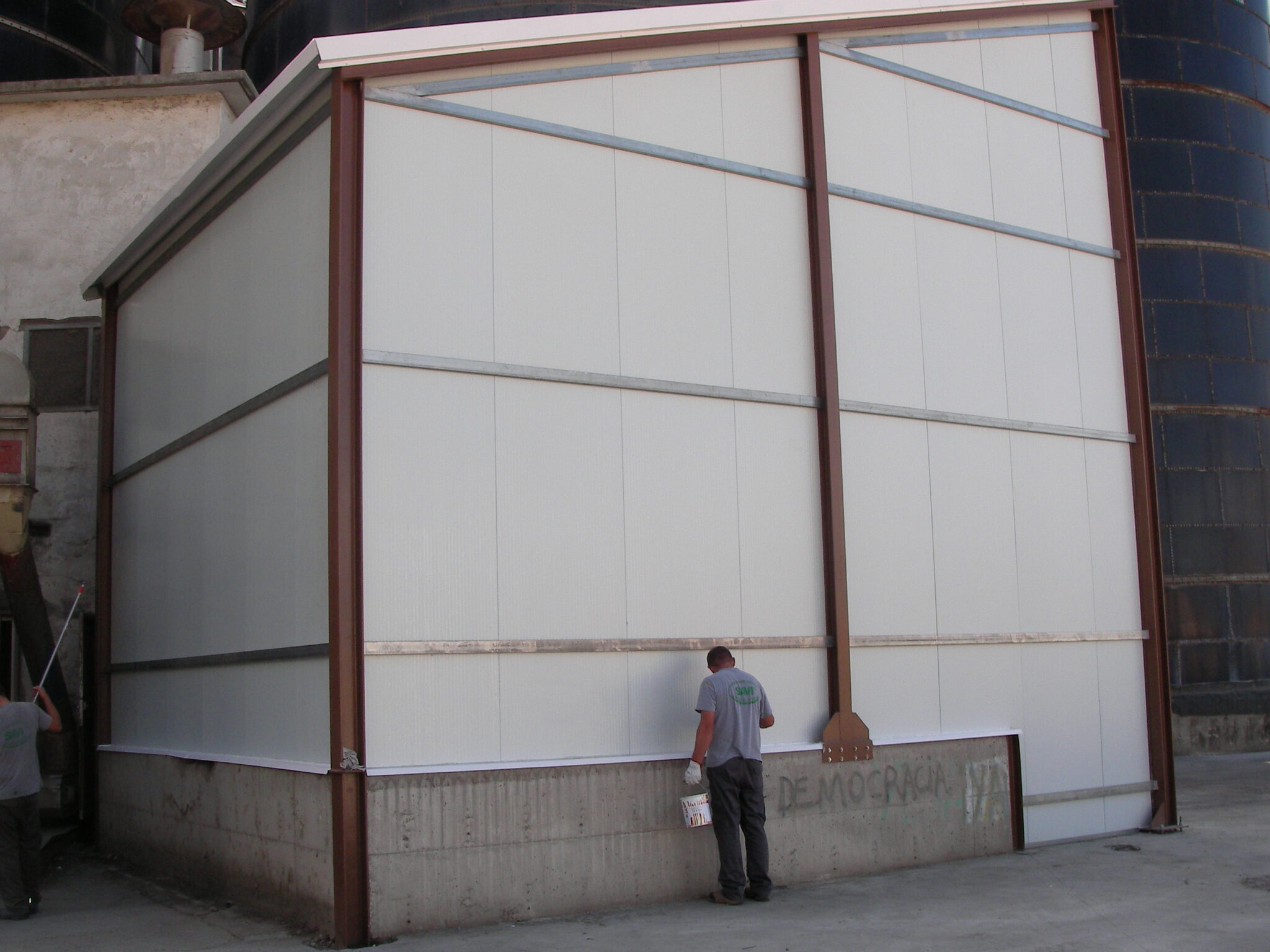
The exterior envelope of a building is decisive for its energy performance and aesthetics. The use of insulating panels in residential and office facades has established itself as the smartest alternative to traditional construction. This system not only optimizes thermal and acoustic insulation, but also guarantees a resistant structure with a significantly faster assembly process.
Benefits of integrating insulating panels in exteriors
The choice of this material responds to a search for a balance between functionality and operating costs. The main advantages of its application include:
- Energy optimization: Its insulating core reduces heating and cooling demand, lowering electricity consumption.
- Simplified installation: The modular system makes it possible to close large areas in record time, reducing labor.
- Minimal maintenance: Steel coatings protect the facade against corrosion and weathering.
- Visual versatility: There is a wide availability of colors and textures for corporate or residential projects.
Comparison of solutions according to the insulation core
| Panel Type | Featured Property | Recommended Application |
| Polyurethane (PUR/PIR) | Maximum thermal insulation | Housing and industrial buildings |
| Rock wool | Fire protection | Offices and public buildings |
| Architectural | Premium aesthetics | Design headquarters and exposed facades |
Main varieties for facade enclosures
In order to select the right panel, it is essential to understand the properties of its internal components, which determine the level of protection of the property.
- Polyurethane cores (PUR/PIR): These are the benchmark in energy efficiency. Thanks to their very low thermal conductivity, they allow maintaining stable temperatures with reduced thicknesses, being the preferred option for modern homes looking for savings in supplies.
- Rockwool cores: They stand out for their non-combustible nature. In addition to providing a superior fire barrier, their fibrous structure is ideal for absorbing noise in noisy office environments or dense urban areas.
- Architectural Models: Designed specifically for projects where image is a priority. These panels usually use hidden fastening systems to offer clean, smooth or micro-profiled finishes that provide a sophisticated air to the building.
Keys to making the right technical choice
Before deciding on the type of panel, the geographical location of the project should be evaluated, as solar exposure and humidity will dictate the required thickness of the insulation. It is also vital to check local safety requirements, especially in public buildings where fire resistance is mandatory by regulation. The balance between initial budget and long-term operational savings is the key to ensuring a profitable investment in any type of exterior enclosure.
Don’t forget to complete your installation with the appropriate sandwich panel mounting accessories. We are experts in the logistics and sale of sandwich panels.


