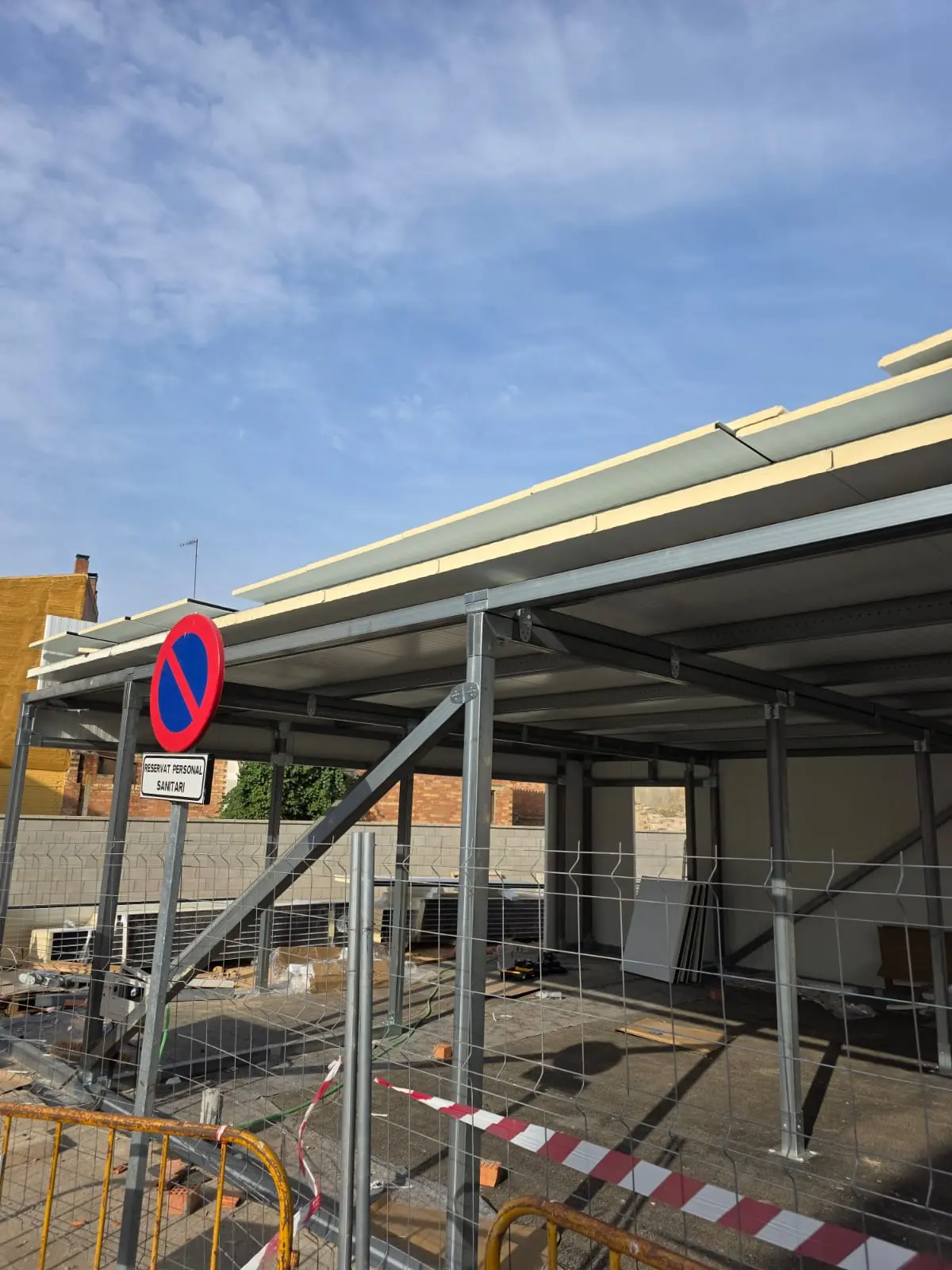
SELECTION GUIDE
Types of sandwich panels: which to choose based on application
There are eight types of sandwich panel according to their use: roof panel (3-rib, 5-rib and flush-joint), facade panel, tile-effect panel, wood panel, rock wool panel, cold storage panel, Agropanel for livestock farms, and uninsulated single sheet metal. They are made to measure, with thicknesses from 30 to 200 mm depending on the type.
HOW TO CHOOSE
How sandwich panels are classified
The most useful way to classify panels isn't by colour or thickness, but by the function the panel needs to perform: roof, wall, cold room, farm or fire protection. From there, you select the core, profile, fixing method, thickness and finish.
Below you'll find each type with the thicknesses, cores and real models from our catalogue, a comparison table, and guidance on which panel to choose for your project.
- Where will it be installed?: First, you need to distinguish between roofing, facade, cold room, farm, or enclosures with specific requirements.
- What do you need to prioritize?: Thermal insulation, fire performance, acoustics, watertightness, resistance to corrosive environments, or architectural finish.
- What finish and joint are suitable?: Ribs, smooth, visible or concealed fasteners, tile imitation, special interior linings, and core thickness.
Main Types of Sandwich Panels
These are the main families available at PanelSandwich.org. Each is then divided into specific models according to profile, fastening, thickness, and finish.
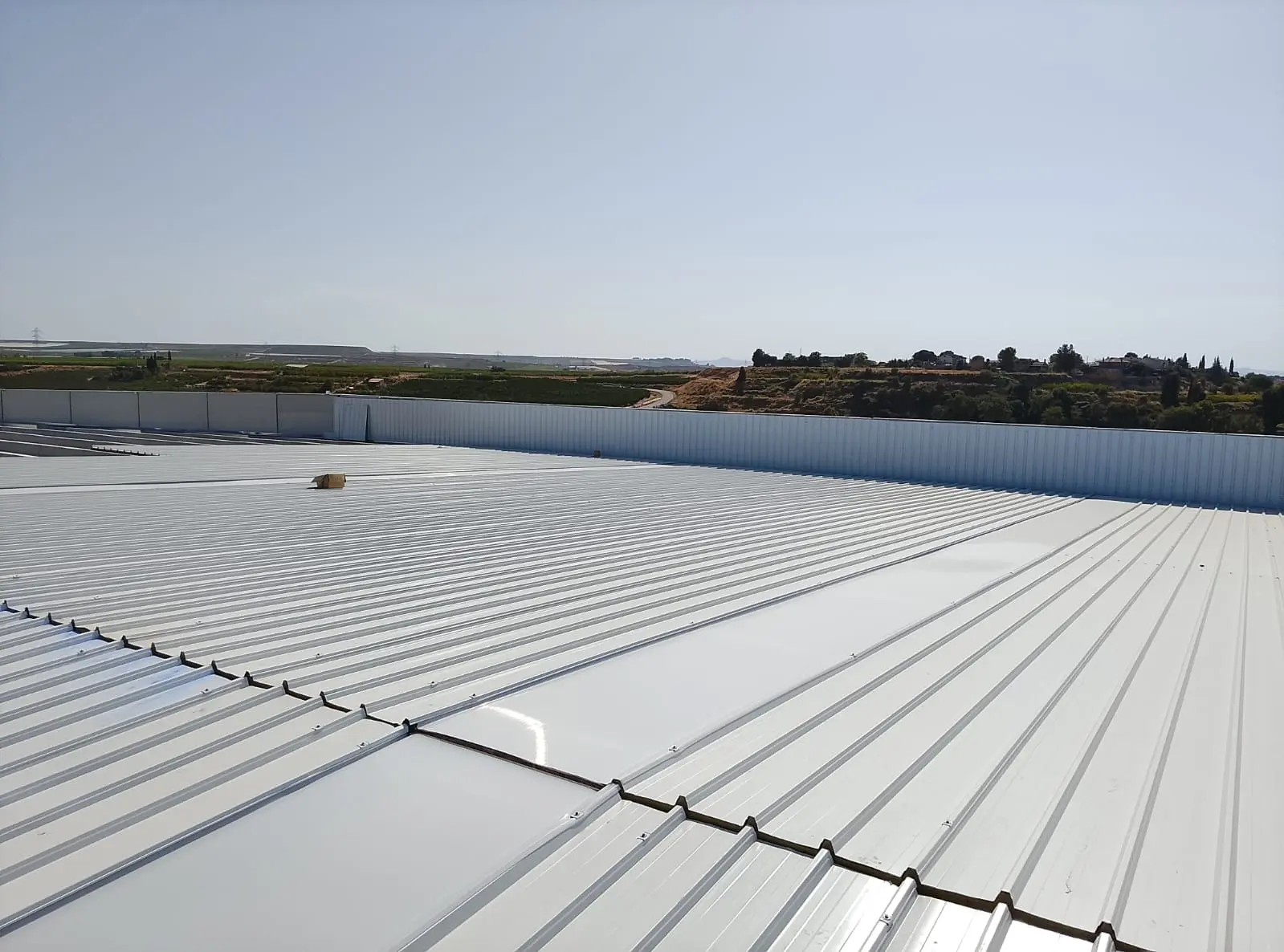
Sandwich panel roofing
For roofs of industrial buildings, homes, porches and garages. Our best-selling option.
- 3 ribs, 5 ribs, or joint cover
- PUR, PIR or PIR/HI core
- Thicknesses from 30 to 100 mm
- 9 or 10 RAL colours
Facade sandwich panel
For exterior and interior walls of industrial buildings, commercial premises and homes.
- Visible or concealed fasteners
- Smooth, wood-effect or brick-effect finish
- Thicknesses from 30 to 100 mm
- Vertical or horizontal installation
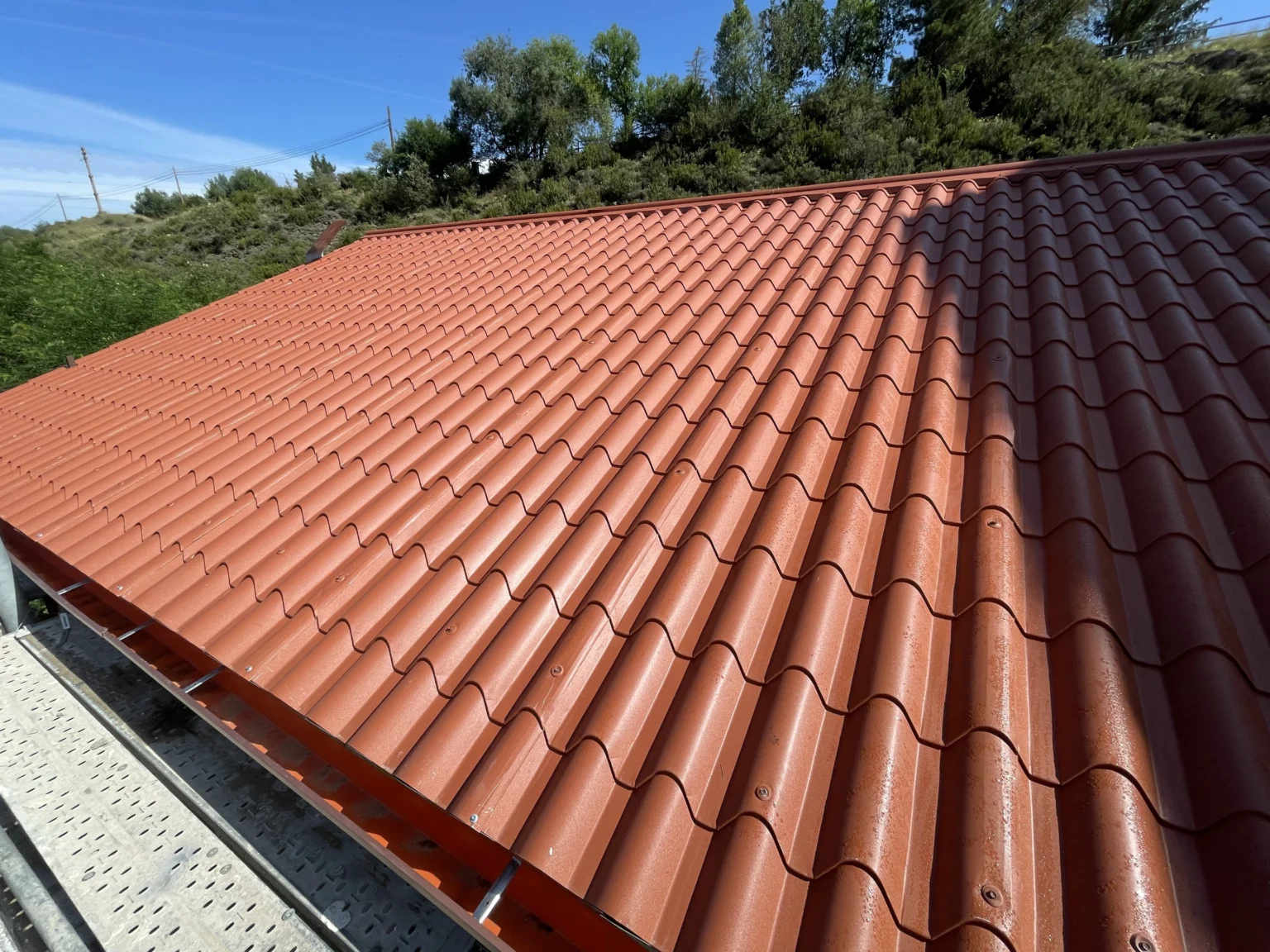
Imitation tile sandwich panel
For homes, porches, outbuildings and roof refurbishments with a traditional look.
- Arabic tile, Marseille tile and slate styles
- Red, aged, green and slate grey
- Average thickness of 5, 6 or 7 cm
- White interior or slatted wood
Wood sandwich panel
For interiors with exposed wood: houses, porches and bungalows.
- 13 mm fir panelling, OSB or moisture-resistant board
- Facade with EPS core
- Roof with rock wool (RF 30 to 90)
- Thicknesses from 30 to 100 mm
Rock wool sandwich panel
For projects with fire resistance or acoustic insulation requirements.
- A2-s1,d0 core (non-combustible)
- Up to EI 240 in facade applications and REI 180 in roof applications
- Thicknesses from 50 to 150 mm
- Acoustic versions available
Refrigerated sandwich panel
For cold storage and freezer rooms.
- Cold storage: 40 to 80 mm
- Freezer: 100 to 200 mm
- White RAL 9010 on both sides
- PUR, PIR or PIR/HI core
Agropanel for farms
For livestock buildings and environments exposed to moisture or ammonia.
- Interior face in fibreglass-reinforced polyester
- 3-rib, 5-rib, flush-joint or tile profile
- False ceiling for livestock farms
- Thicknesses from 30 to 100 mm
Single corrugated sheet
For sheds, warehouses and buildings that don’t require insulation.
- Profile 30, profile 40, mini-wave or tile profile
- 0.6 mm galvanised steel
- 1.10 m width
- Roof and facade
Comparative table of sandwich panel types
Details of the models in our catalogue. Lengths are made to measure; final thickness depends on the insulation required and the spacing between purlins.
| Type | What it’s used for | Thicknesses | Core | Models |
|---|---|---|---|---|
| Roof | Roofs of industrial buildings, homes and porches | 30–100 mm | PUR, PIR, PIR/HI | 3-rib, 5-rib, flush-joint |
| Facade | Exterior and interior walls | 30–100 mm | PUR, PIR, PIR/HI | visible fasteners, concealed, smooth, wood-effect |
| Tile-effect | Residential roofs and refurbishment | 5–7 cm average | PUR, PIR/HI | Arabic tile, Marseille, slate |
| Wood | Interiors with exposed wood | 30–100 mm | EPS or rock wool | fir panelling facade, wood roof |
| Rock wool | Fire resistance (EI/REI) and acoustics | 50–150 mm | A2-s1,d0 rock wool | roof, facade, acoustic |
| Cold storage | Cold rooms | 40–200 mm | PUR, PIR, PIR/HI | cold storage, freezer |
| Agropanel | Livestock farms and corrosive environments | 30–100 mm | PUR, PIR, PIR/HI | 3-rib, 5-rib, tile |
| Single sheet metal | Uninsulated roofs and facades | 0.6 mm sheet | No core | profile 30, profile 40 |
The Insulating Core Also Changes the Panel Type
Two visually similar panels can have very different performances depending on the core and system configuration. It is advisable to separate the choice by use from the choice by technical performance.
PUR (polyurethane)
The most common and cost-effective option. Provides strong insulation with minimal thickness. Fire reaction class C-s3,d0 (or B-s2,d0 depending on the model).
PIR and PIR/HI
Polyisocyanurate: insulates as well as PUR and performs better in fire, with ratings of B-s2,d0 (PIR) or B-s1,d0 (PIR/HI). Required by many industrial buildings and commercial premises.
Rock wool
Non-combustible (A2-s1,d0) and better acoustic insulation. Requires more thickness than PIR to achieve the same insulation level, and is heavier.
EPS (polystyrene)
We use this in the wood panel for facades. We do not manufacture sheet metal panels with EPS.
More detail in the guide PUR, PIR, EPS or rock wool: which core to choose.
Types of Sandwich Panels in Real Projects
These photos show how the solution changes depending on the application: industrial roof, housing, and combined enclosures.
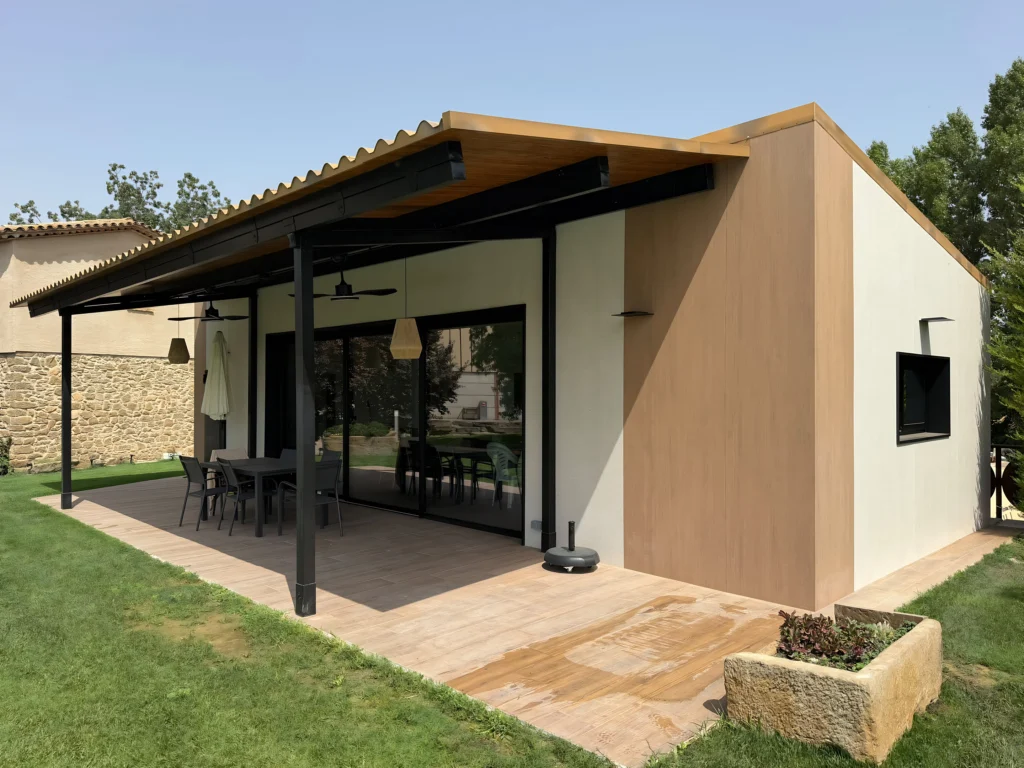
Residential and Enclosure
The panel is also used in residential and industrialized construction.
View project
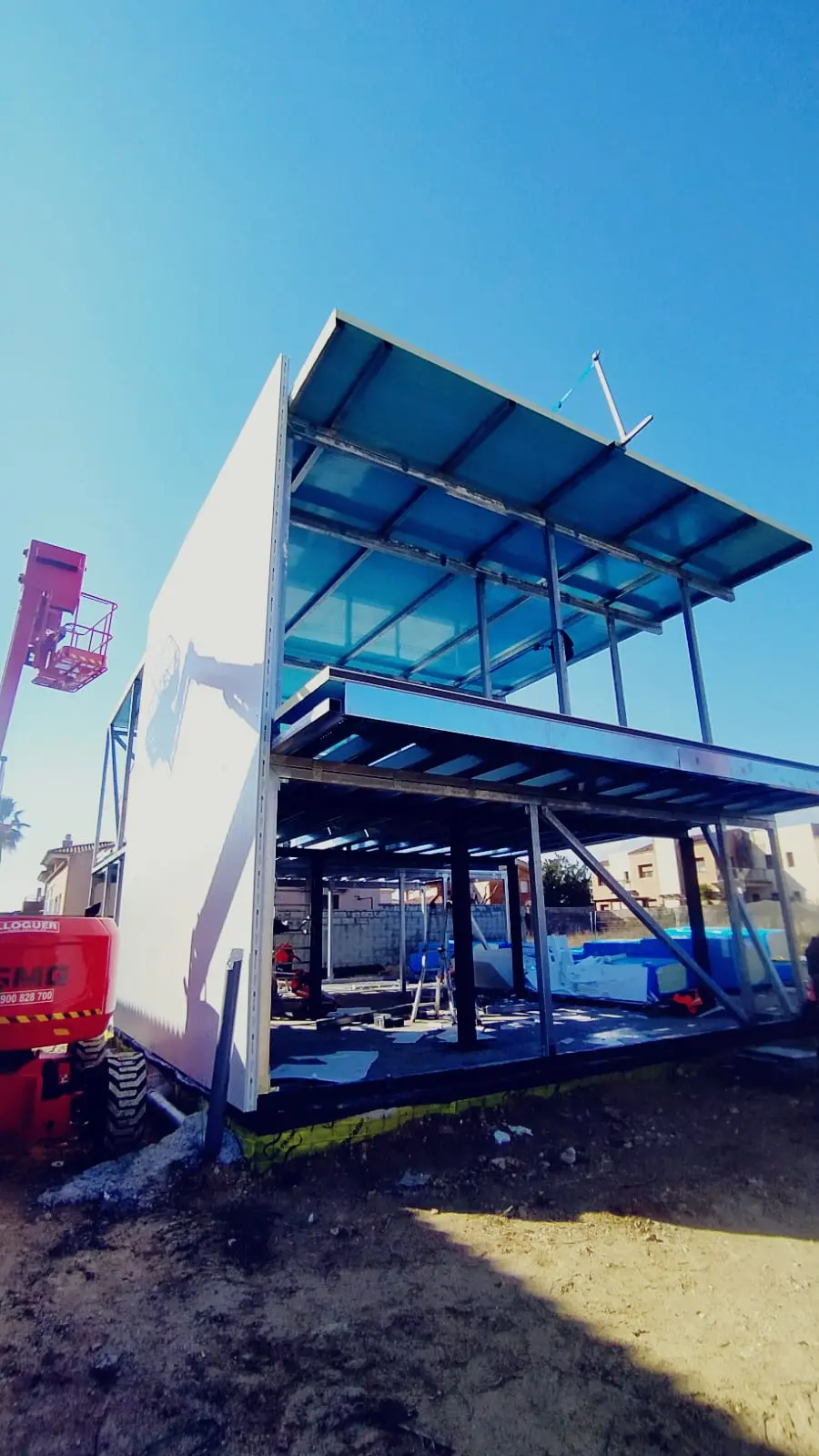
Roof + Facade
A single project can combine different panel families depending on each area.
View projectWhich Type of Panel to Choose Based on the Project
This sequence avoids comparing products that solve different problems. First, the application is defined, and then the specific model is chosen.
Frequently Asked Questions About Sandwich Panel Types
Depending on their use, there are eight types: roof, facade, tile-effect, wood, rock wool, cold storage, Agropanel and single sheet metal. Within each type, the core (PUR, PIR, PIR/HI, rock wool or EPS), profile, fixing method, thickness and colour can vary.
The roof panel has high ribs to channel away water and is screwed through the crest of the rib into the purlins. The facade panel is flatter, can be installed vertically or horizontally, and may have visible fasteners or fasteners concealed within the joint.
For the roof, choose the tile-effect panel if you want a traditional look, or a 5-rib or flush-joint panel from 50 to 80 mm if you prioritise insulation and price. For the walls, choose the facade panel with concealed fasteners, smooth finish or wood-effect.
The 3-rib roof panel, the facade panel with visible fasteners, and single corrugated sheet metal (uninsulated). We also offer stock, clearance and second-quality panels. You’ll find indicative prices in our price-per-m² guide.
At the same thickness, PUR and PIR cores insulate better than rock wool. Rock wool performs better in fire protection and acoustic insulation. To improve insulation, increase the panel thickness.
In cold storage rooms (40 to 80 mm) and freezer rooms (100 to 200 mm). It features white sheet metal on both sides and joints designed to prevent cold loss.
At PanelSandwich.ORG, you order to measure: tell us the type, thickness, colour and lengths, we’ll prepare your quote, and we ship throughout Spain and Portugal. In Catalonia and nearby provinces, we also handle installation. Request your quote.