
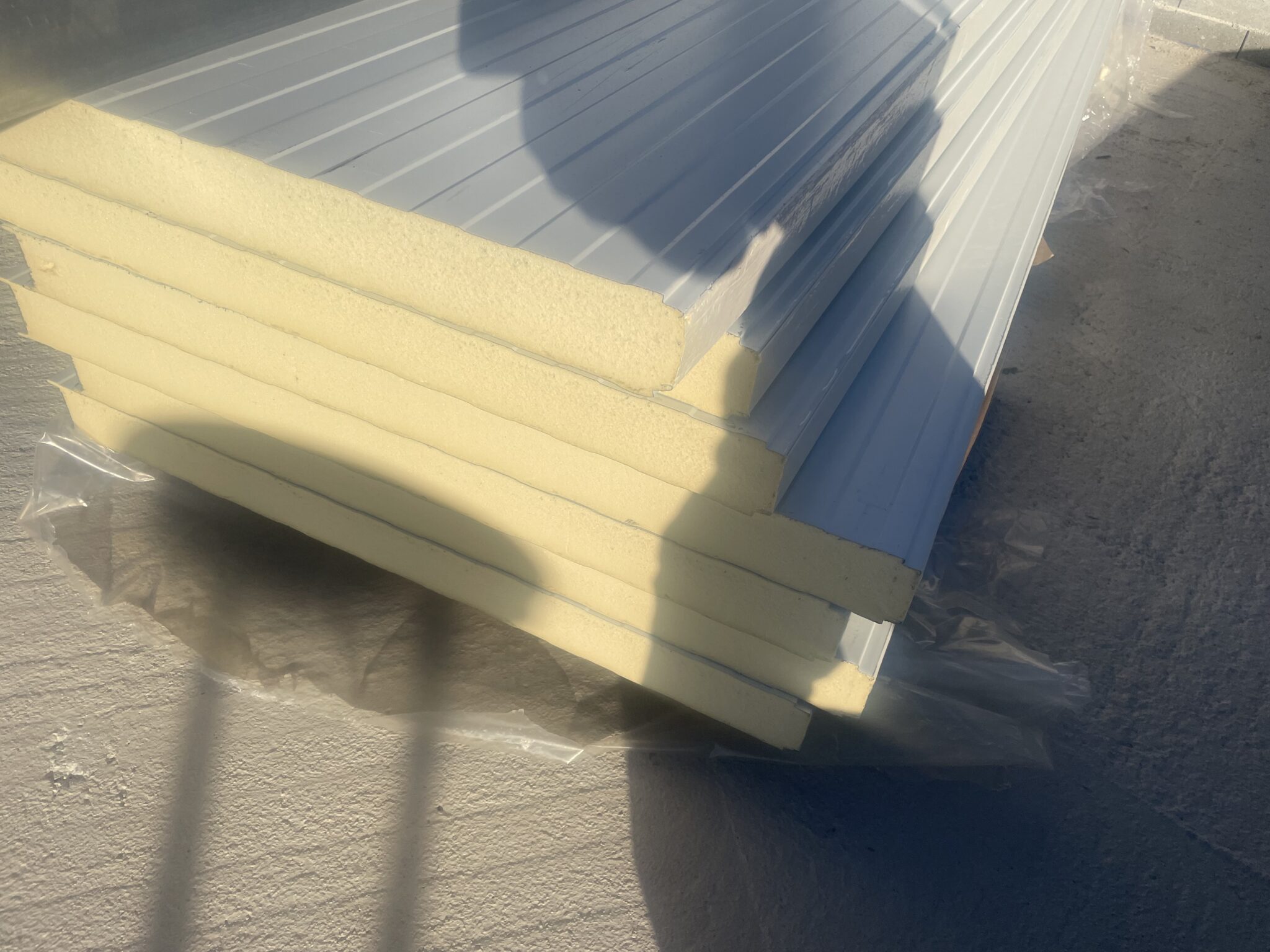
Criteria for Selecting the Right Thickness for Industrial Roofs
The thermal and structural dimensioning of a roof is key to ensuring the efficiency of any building. Insufficient thickness generates high energy losses, while over-dimensioning unnecessarily increases construction costs. Find the technical advice you need through a company specialized in sandwich panels and industrial roofs.
Determining Factors for Thickness Selection
The geographical location of the project and the specific use of the space define the minimum mandatory insulation requirements.
Parameters to Consider
-
•
Local climate: Areas with extreme temperatures require greater thicknesses. -
•
Internal activity: Frozen storage facilities require much greater thicknesses than dry warehouses. -
•
Energy regulations: Compliance with the requirements of the Technical Building Code.
Recommended Thicknesses by Application
Benefits of Proper Dimensioning
Choosing the ideal industrial warehouse sandwich panel thickness directly impacts the building’s electricity bill. Insulation adapted to the activity prevents climate control equipment from working under strain, extending its service life and maintaining a comfortable working environment.
For commercial or general industrial projects in temperate climates, a thickness of 50 mm provides excellent thermal performance.
Frequently Asked Questions About Industrial Warehouse Sandwich Panel Thickness
The minimum recommended thickness to ensure basic insulation and structural rigidity is 30 to 40 mm.
Special thicknesses ranging from 100 mm to 200 mm are used, ensuring thermal bridge interruption.
Yes, thicker panels offer greater mechanical resistance, allowing for greater spacing between purlins in the supporting structure.
High-density injected polyurethane provides very low thermal conductivity, ideal for optimizing thickness.
The increase in material cost is moderate compared to the long-term energy savings benefit it provides.
It depends on the climate zone where the warehouse is located; the technical project will calculate the thermal transmittance required to comply with the law.


