
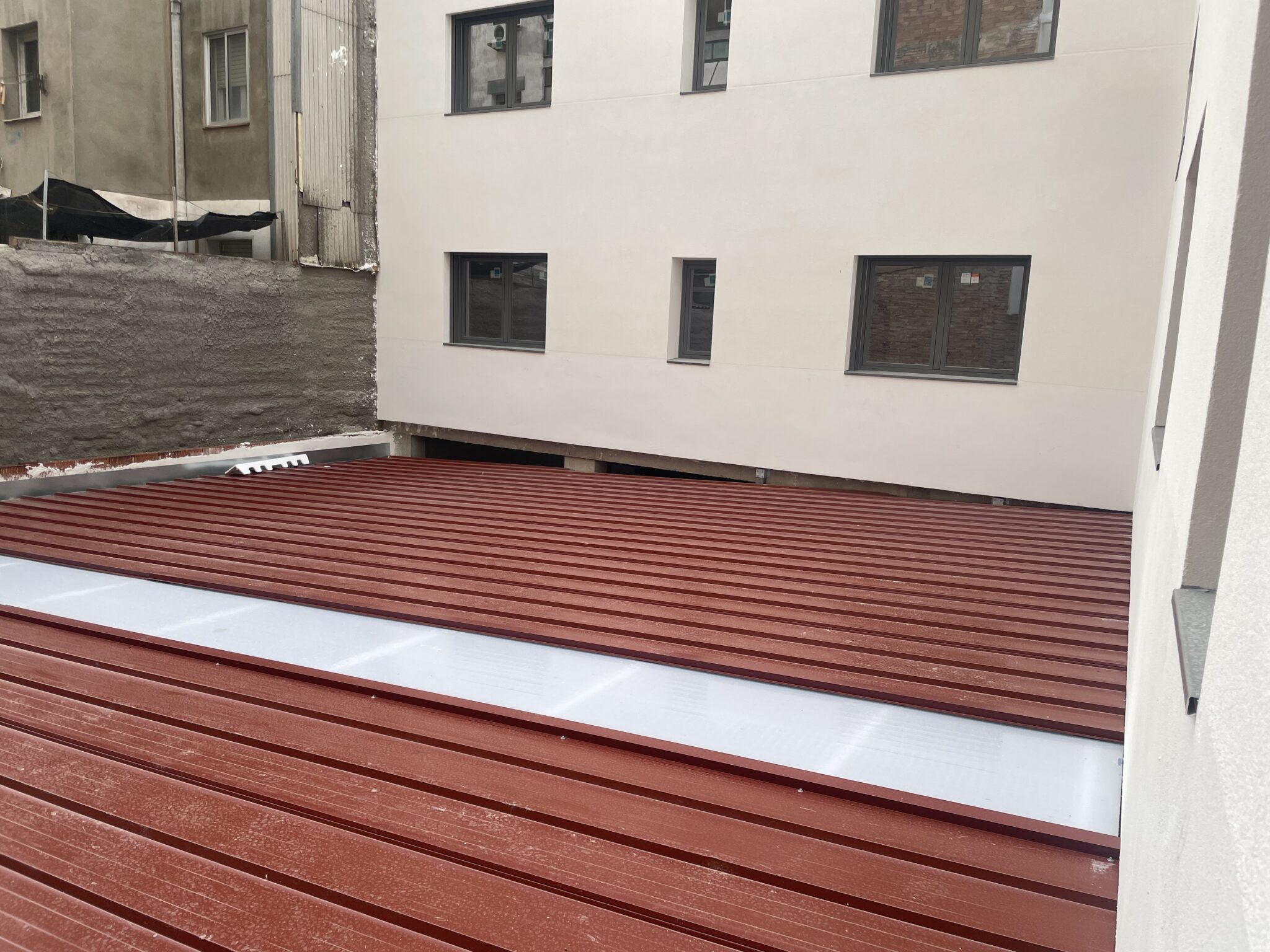
Legal and Safe Steps for Asbestos Cement Removal and Sandwich Panel Installation
Replacing old fiber cement roofs is a priority for updating agricultural, industrial, and residential properties. This change not only eliminates an obsolete material but also instantly revalues the property. Trusting roofing solution experts ensures the acquisition of state-of-the-art materials for the new installation.
The process requires strict safety protocols and environmental regulations for dismantling. The ultimate goal of removing asbestos cement and installing sandwich panels is to transform a deficient roof into a watertight, lightweight, and highly energy-efficient surface.
Differences after Removing Asbestos Cement and Installing Sandwich Panels
Project Phases for Asbestos Cement Removal and Sandwich Panel Installation
-
1.
Hiring a company registered in the official hazardous waste removal registry. -
2.
Manual dismantling of old sheets, avoiding breakages or abrupt friction. -
3.
Sealed packaging of removed material and transport to an authorized landfill. -
4.
Inspection and remediation of existing metal profiles or wooden beams. -
5.
Direct fastening of new insulating sheets onto the clean and leveled structure.
Modernizing the roof eliminates structural risks and improves the aesthetic appearance of the building. It is an investment that solves recurring humidity problems from the first day of installation.
Frequently Asked Questions about Asbestos Cement Removal and Sandwich Panel Installation
No, legislation requires that dismantling be carried out exclusively by an approved company equipped to handle fiber cement.
Although technically possible to encapsulate, current regulations recommend complete removal of the old material to avoid future problems.
It depends on the surface area, but removal and new installation in medium-sized warehouses usually take only a few days.
As it is a much lighter material, the original structure is almost always valid, requiring only minor leveling adjustments.
Yes, it is mandatory to apply for a major building permit and report on the management plan for the generated waste.
Regional and European subsidies are frequently activated for energy rehabilitation and the removal of obsolete materials.


