The sandwich panel cladding is the two faces that enclose the insulation. It’s almost always pre-painted galvanized steel sheet; what changes is the profile (ribbed, smooth, micro-profiled, tile…), the sheet thickness and, above all, the paint or coating, chosen according to the environment: indoor, rural, urban, industrial, coastal, livestock farms, or the food industry.
Face materials
- Pre-painted galvanized steel: the standard for roofs and façades. Our panels use 0.4 to 0.6 mm S250GD steel.
- Polyester with fiberglass: the inner face of the Agropanel, which won’t corrode with ammonia or the humidity in livestock farms.
- Wood, OSB, or board: the inner face of the wood panel.
- Kraft or aluminium: in lightweight suspended-ceiling panels.
Outer face profile
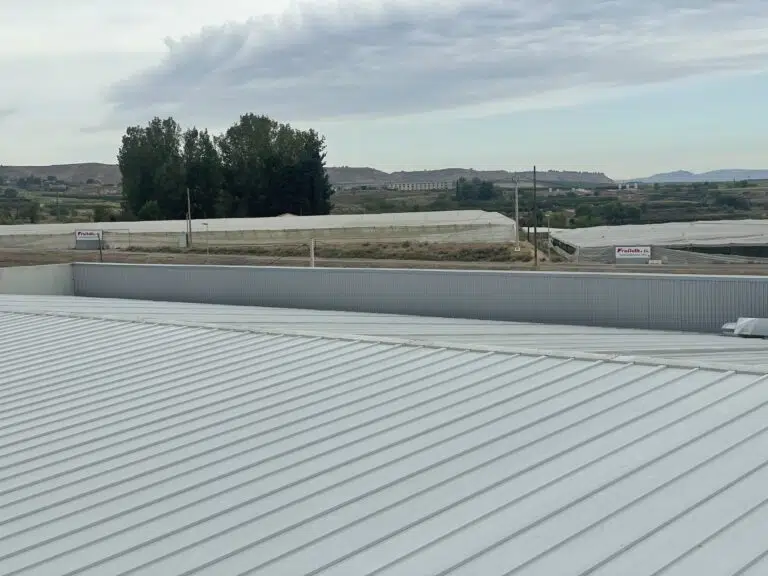
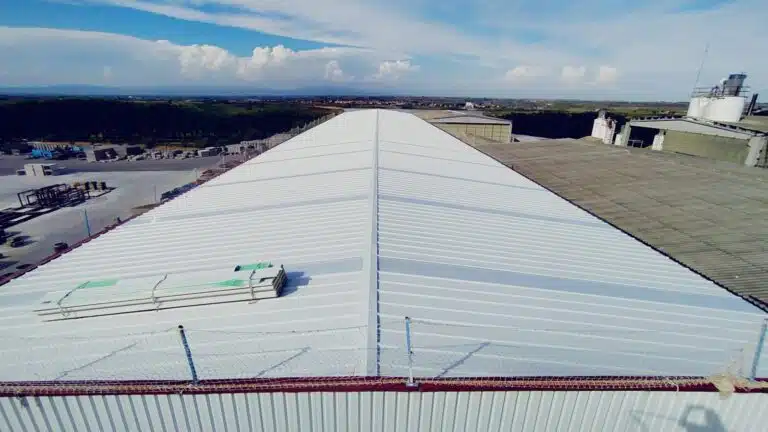
- Ribbed: the roof profile (3 ribs, 5 ribs, flashing). The ribs add stiffness and channel water.
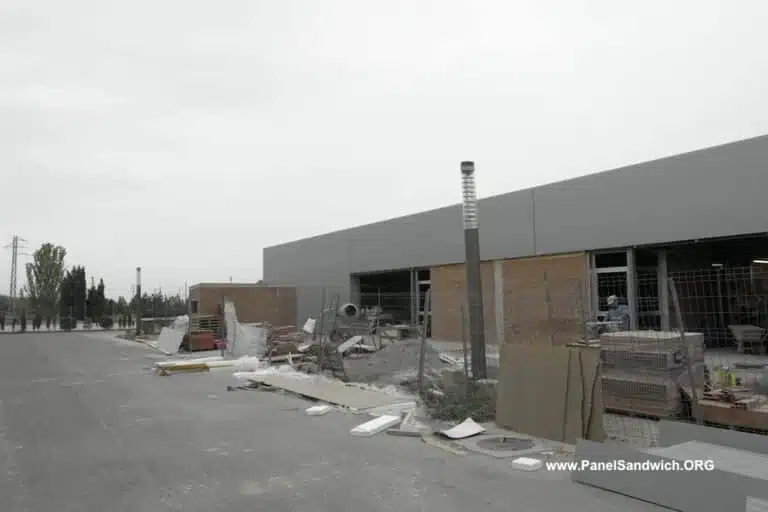
- Smooth, micro-profiled, or ribbed: the façade profile. The smoother it is, the more elegant it looks, but dents and waviness show more.
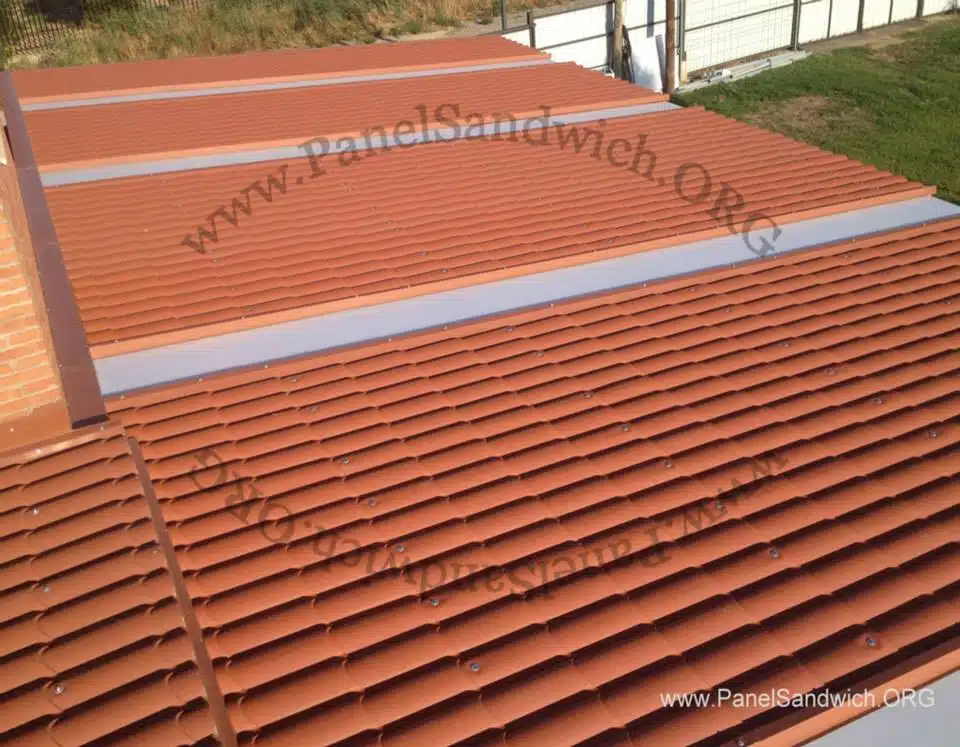
- Tile or slate: embossed sheet on the tile-effect panel.
- Embossed finishes: wood- or brick-effect for façades.
Which coating to choose depending on the environment
This is a guideline: durability also depends on orientation, rain that washes the roof, and maintenance. If the job is in an aggressive environment, tell us when requesting a quote. More technical detail in sandwich panel paint and coatings.
Colours
Paint also sets the colour. You can find the full chart in sandwich panel colours: RAL chart. Light colours reflect more sun and keep the interior cooler.
The protective film
Panels arrive with a plastic film that protects the paint during transport and installation. Remove it as soon as the panel is in place: in the sun it hardens and cracks, and later it’s very hard to peel off along with its adhesive.
Frequently asked questions
What sheet thickness does a sandwich panel have?
Typically 0.4 or 0.5 mm on each face, and up to 0.6 mm on the outer face. Thicker sheet resists impacts and hail better.
Which coating lasts longest near the sea?
High-build polyester or PVDF a few kilometres from the coast; on the seafront, very thick coatings. Also, rinse the roof with fresh water from time to time to remove salt.
Can you choose a different cladding on each face?
Yes. It’s common in livestock farms (lacquered exterior and polyester interior) or in wood panels (sheet exterior and wood interior).
Does colour affect the indoor temperature?
Yes. A white or light grey panel reflects more solar radiation than a dark one; with a good insulation thickness, the difference is reduced.
Tell us where the job is and what it’s for, and we’ll recommend the best cladding and colour. Request a quote or call us on 699 147 762.