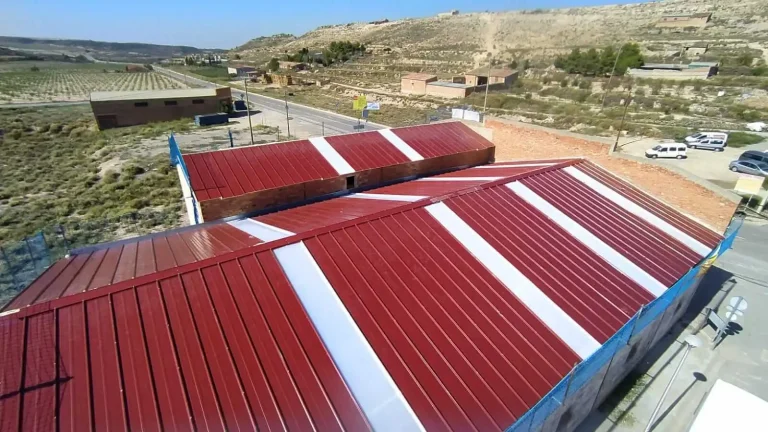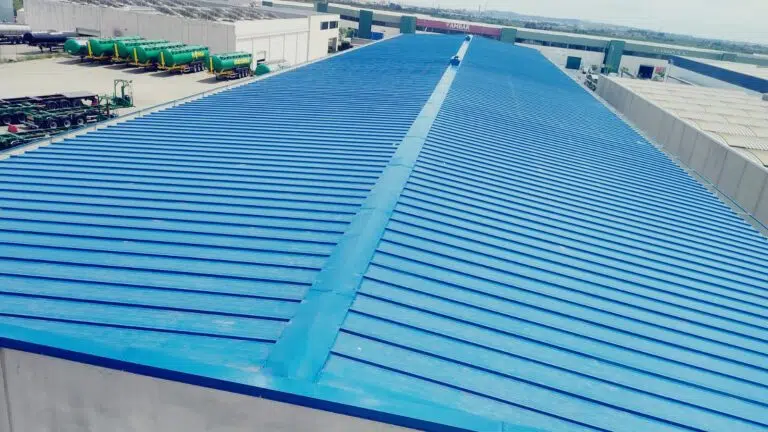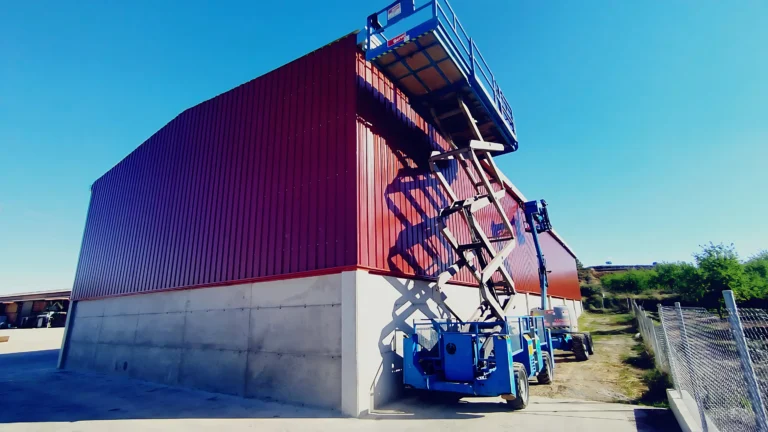
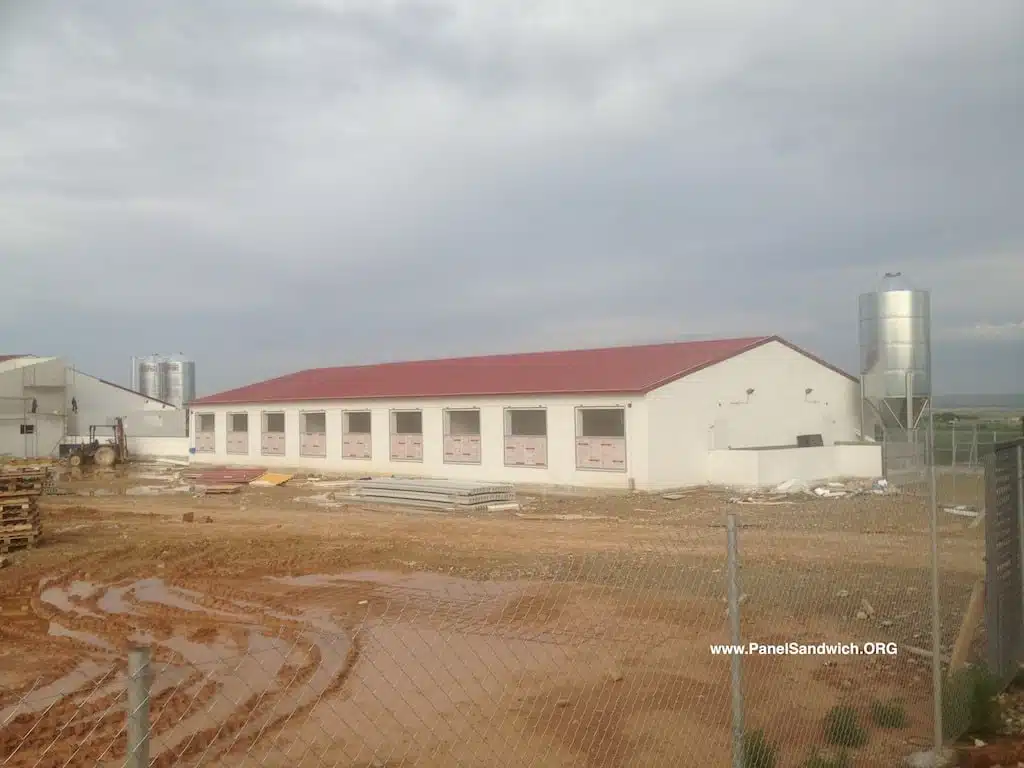
To choose the sandwich panel for your roof, start with the building’s use. In a home, tile-effect panels are usually prioritised for aesthetics. In industrial units, warehouses and commercial buildings, corrugated panels or flashing-cap panels. If fire protection is key, choose a rock wool core. And on farms, Agropanel. Then match the core and thickness to your climate and the insulation you need, and check that your roof meets the model’s minimum pitch.
Looking for specific models or pricing? You’ll find them all in roof sandwich panels.
A sandwich roof panel is two metal sheets, usually steel, with an insulating core in between: polyurethane, polystyrene or rock wool. It’s lightweight, quick to install, and insulates against cold, heat and noise. Below you’ll find the types, how to choose, and a comparison with a traditional roof.
Types of sandwich roof panels
| Type | What sets it apart | Typical use | Minimum pitch |
|---|---|---|---|
| Corrugated (3 or 5 ribs) | Exposed screws, high mechanical strength and good drainage | Industrial units, warehouses, commercial buildings | 5% |
| Flashing-cap | Hidden fixings, clean finish and better protection against water | Roofs where the finish matters | 5% |
| Tile-effect | Ceramic-tile look with the panel’s insulation | Homes, porches, pergolas | 10% |
| Slate-effect | Slate look | Homes with a steep pitch | 30% |
| Rock wool | Better fire performance and acoustic insulation | Buildings with fire or noise requirements | Depending on model |
| Agropanel | Treatment resistant to corrosive gases from farms | Farms and livestock buildings | Depending on model |
Corrugated panel: for industrial units and warehouses
It’s the right choice for industrial units, warehouses and commercial buildings. The ribs provide mechanical strength and help drain water. The 3-rib roof panel offers high resistance for areas with strong winds or snowfall.
Flashing-cap panel: hidden screws
The flashing-cap roof panel is screwed down and then the fixing is covered with a press-on cap. The result is a clean-lined roof, with no visible screws and better protection against water. It suits modern projects and is the option that works with the lowest pitch.
Tile-effect and slate-effect panels: traditional aesthetics
The tile-effect sandwich panel recreates the look of ceramic tiles, but with the panel’s light weight and insulation. It’s ideal for homes, porches and pergolas, installs easily and needs very little maintenance. The slate-effect version follows the same idea, but needs a much steeper pitch.
Rock wool panel: when fire is the priority
If you need more fire protection, the rock wool roof panel is the best option. It withstands high temperatures and also insulates very well against noise.
Agropanel: for farms
It has a special treatment that resists the corrosive gases generated on farms. It’s the option designed for livestock operations and agricultural buildings.
Which core to choose
- Polyurethane: with its high insulating capacity, it’s ideal in areas with extreme climates.
- Polystyrene: another possible insulating core. Compare its technical datasheet with polyurethane before deciding.
- Rock wool: excellent for fire performance and acoustic insulation.
Whatever the core, check that the panel meets the energy-efficiency regulations that apply to your building—especially if you want to reduce heating or cooling bills.
How to choose your roof panel
- Building use. Home: prioritise tile-effect panels. Industrial unit or warehouse: corrugated or flashing-cap. Farm: Agropanel.
- Climate. In areas with high or extreme temperatures, look for higher insulating capacity. If there’s strong wind or snow, prioritise mechanical strength. Also consider corrosion.
- Fire safety. Si es un requisito, elige núcleo de lana de roca.
- Roof pitch. Each model has a minimum pitch. With a low pitch, from 5%, the flashing-cap is the best fit.
- Aesthetics. Tile or slate for a classic look. Flashing-cap for a clean, modern finish.
- Budget. Balance price and performance. Cheaper panels may not offer the same guarantees for insulation and durability.
Advantages and points to consider
A sandwich panel roof provides:
- Continuous thermal insulation, which reduces spending on heating and air conditioning.
- Fast installation, thanks to the overlap system, which shortens build times.
- Watertightness against heavy rain, thanks to its joints.
- Almost no maintenance over its service life.
- Acoustic protection against outside noise and rain.
- Low weight, so it needs less supporting structure.
In return, you must respect each model’s minimum slope, choose the core based on your fire and insulation requirements, and take care with installation: poorly resolved fixings, joints, and flashings are the usual cause of leaks.
Which is better, tiles or sandwich panels?
It depends on what you’re looking for. Compared to a traditional tile or concrete roof, these are the differences:
| Feature | Traditional roof (tile or concrete) | Sandwich panel roof |
|---|---|---|
| Weight | Very high, requires thick beams | Very lightweight, reduces the structure |
| Installation time | Slow, weeks or months | Fast, days |
| Insulating capacity | Low, needs extra layers | High, with the integrated core |
| Risk of leaks | Medium to high, due to loose pieces | Very low, with continuous, interlocking pieces |
| Labour cost | High | Reduced |
If you want the look of tiles without giving up these advantages, you have two options: tile-effect panels or laying traditional tiles over the panel. We explain this second option in how to install traditional tiles over metal sandwich panels.
Frequently asked questions
What minimum slope does a sandwich panel roof need?
It depends on the model: 5% for flashing-cap and corrugated with exposed screws, 10% for tile-effect panels, and 30% for slate-effect.
Can you walk on a sandwich roof panel?
Yes, it supports the installers’ weight during assembly. Always step on the ribs and wear suitable footwear to avoid damaging the sheet.
How long does a sandwich panel roof last?
With correct installation and in normal weather conditions, its service life can exceed 30 years without losing its insulating properties.
Do you need to waterproof the roof?
Usually not. If the installation, joints and flashings are correct, the system itself is watertight.
What panel thickness should I choose?
It depends on the insulation your area requires and the building’s use. The most common roof thicknesses range from 30 to 60 mm. If you’re going to climate-control the space, ask us to recommend the thickness based on your location.
Does it insulate against the noise of rain?
Yes. The core acts as an acoustic barrier and reduces noise from rain, hail and nearby traffic.
Not sure between several models? Tell us where the job is, the building’s use and the roof pitch, and we’ll recommend the panel and thickness. Request a no-obligation quote or call 699 147 762. If you need it, we can also handle the installation of your roof.