Types of sandwich panel are classified in two ways: by the insulating core inside (polyurethane PUR, PIR, rock wool, EPS or XPS) and by their use (roof, façade, tile imitation or refrigerator). The core defines thermal and acoustic insulation, fire performance, durability and weight. The use defines the sheet profile and the joining system.
Looking for prices or specific models? You’ll find them all in types of sandwich panel.
In short: if you’re looking for maximum thermal efficiency at a good price, PUR is the usual choice. If fire safety also matters, PIR. If you need acoustic insulation or the highest fire resistance, rock wool. EPS and XPS are less common and appear in economical or specific solutions.
What a Sandwich Panel Is and Why There Are So Many Types
A sandwich panel (also called sandwich sheet) is made up of two outer layers or “skins,” usually metal sheets, and an insulating core between them. That combination gives it strength, lightness and insulation capacity.
There is no single model for everything. Choosing the wrong type can lead to problems with watertightness, condensation or failure to meet fire requirements. That’s why it’s worth understanding the cores first and then the uses. If you want to see the catalogue directly, check the types of sandwich panel by use.
Types of Sandwich Panel According to Insulating Core
Polyurethane (PUR)
It is one of the most widely used in industrial, agricultural and residential construction. Its rigid polyurethane foam core insulates very well even at reduced thicknesses. That’s why it’s very popular in roofs and enclosures where a good indoor temperature is required in summer and winter.
- Excellent thermal insulation.
- Very light, making it easy to transport and assemble.
- Very competitive price-quality ratio.
Its weak point is fire: its performance is limited compared to other cores. Even so, it’s a great choice when the main criterion is thermal efficiency.
Polyisocyanurate (PIR)
PIR is an evolution of PUR, with a similar but improved chemical structure. Its great advantage is better fire performance without losing insulating capacity.
- Very good thermal insulation.
- Better fire reaction than PUR. Depending on the product, it can achieve classifications such as B-s1,d0.
- Good dimensional stability at high temperatures.
It is the preferred choice when fire safety is key, such as in industrial buildings, logistics centers or public facilities. Being light and thin, it also reduces transport and assembly costs compared to rock wool.
Rock wool
The rock wool panel replaces the foam with mineral fibers that do not combust. It acts as a barrier against fire and, thanks to its fibrous structure, breaks sound waves. This reduces external noise and internal reverberation. You can see the range of rock wool sandwich panel.
- Excellent acoustic insulation.
- The best fire performance: it is non-combustible and, depending on the product, can achieve A1 classification.
- Good thermal behavior.
- Heavier than panels with PUR or PIR core.
It is common in machine rooms, auditoriums, transformer centers, flammable material warehouses, industries with demanding fire regulations and homes in noisy areas.
Expanded Polystyrene (EPS) and Extruded (XPS)
There are also panels with polystyrene core. They are less common in roofs, but appear in economical or specific solutions.
- EPS: acceptable thermal insulation, usually an economical option, light and easy to install. Its fire resistance is not high, which may rule it out in some buildings, for example those storing hazardous materials.
- XPS: better moisture resistance and better thermal insulation than EPS. Somewhat more rigid and durable.
If you’re unsure between these cores, we explain the difference between PIR and EPS sandwich panel.
Quick Core Comparison
| Core | Thermal insulation | Acoustic insulation | Fire | Weight |
|---|---|---|---|---|
| PUR | Excellent | Lower than rock wool | Limited | Very light |
| PIR | Very good | Lower than rock wool | Better than PUR | Light |
| Rock wool | Good | Excellent | The best (non-combustible) | Heavier |
| EPS | Acceptable | Lower than rock wool | Low | Light |
The table is indicative. Exact performance depends on the manufacturer, thickness and specific product. If your project has fire requirements, always check the classification in the technical data sheet.
Types of sandwich panels according to their use
Roofing panel
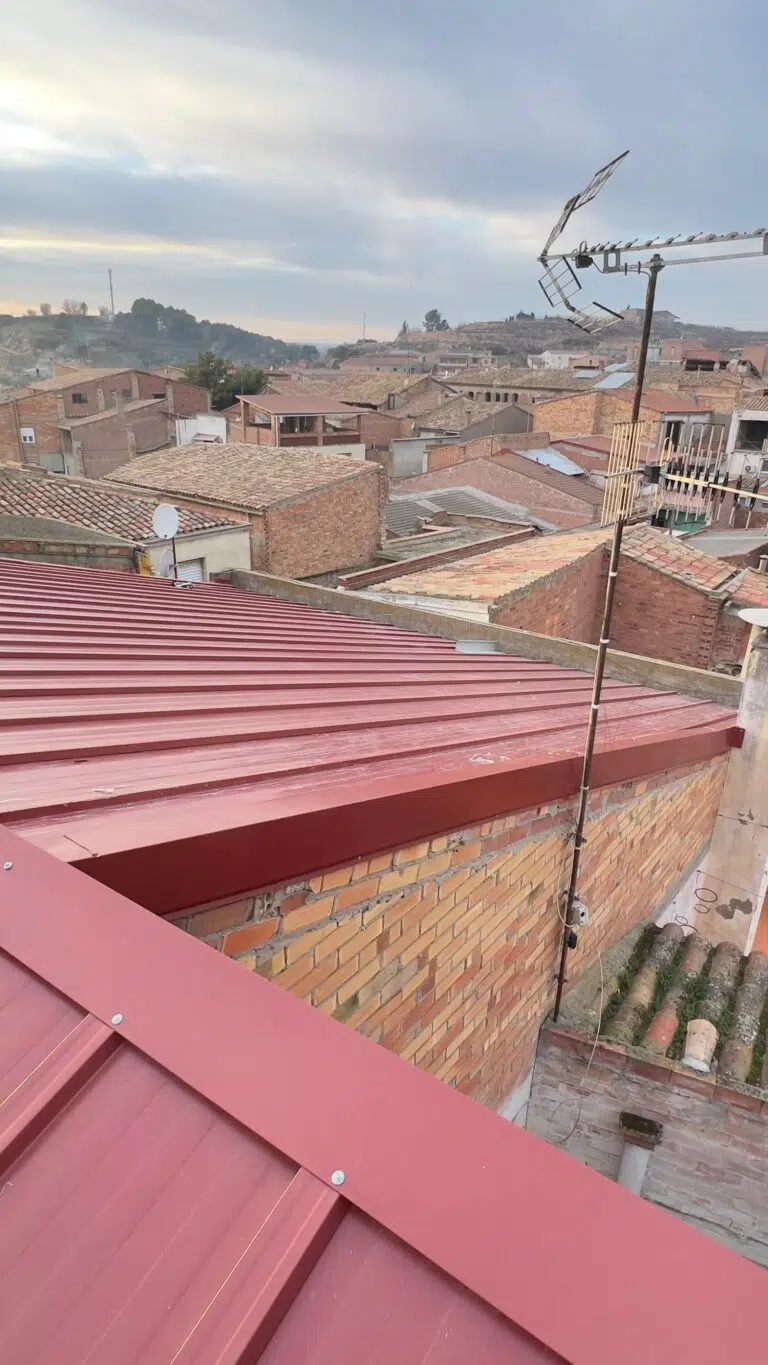
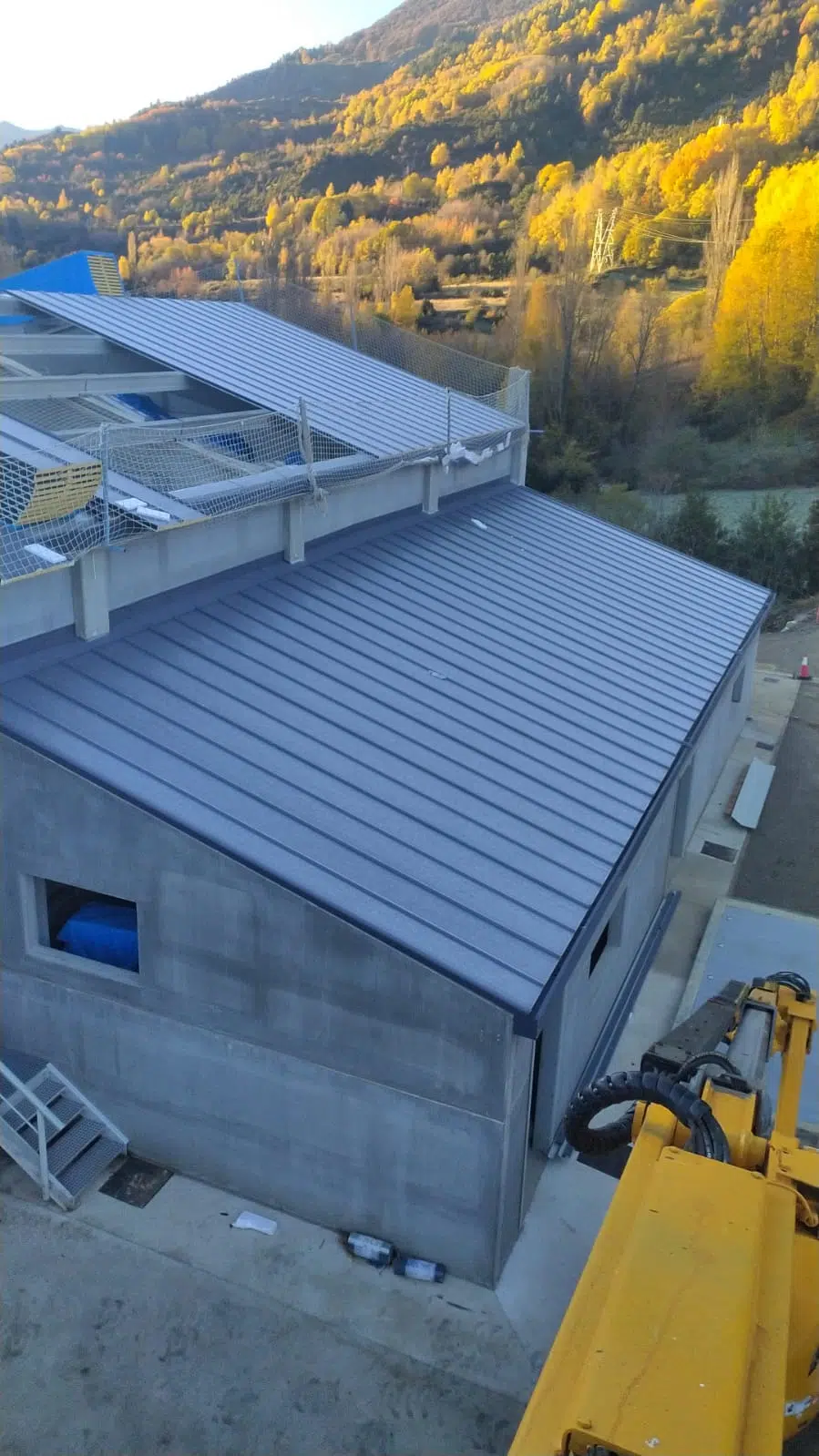
It protects the building from rain, wind and snow. Its outer face has a corrugated profile, with ridges, that serves two functions: it increases strength to withstand snow or wind loads and channels rainwater. Its overlap system provides watertightness even at low slopes, always respecting the minimum slope of the system.
It is the standard choice for industrial buildings, porches, garages, farms, sheds and house extensions. There are variants with 3 corrugations, 5 corrugations and flashing. You can see them in sandwich panel for roof. For farms there is also the agropanel, designed for agricultural and livestock buildings.
Façade panel
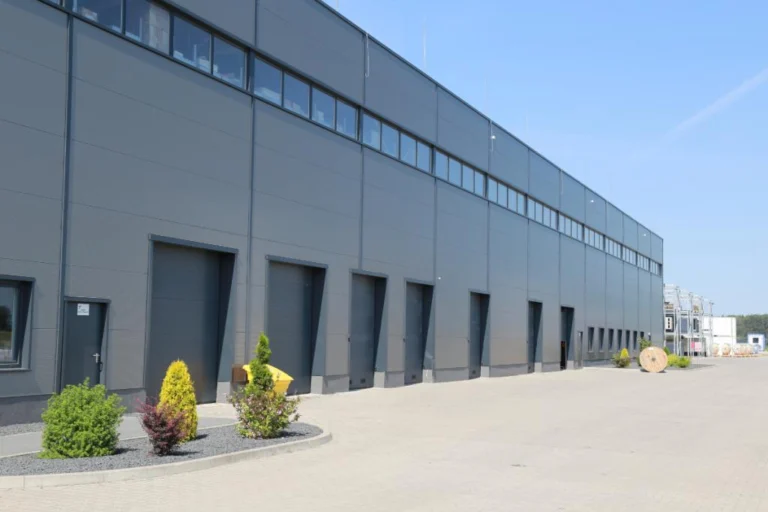
Designed for vertical enclosures. It has a smoother or even flat profile and a tongue-and-groove joint. It can be installed vertically or horizontally. There are two main variants:
- Visible fixing: more economical and quicker to install. Ideal for industrial buildings and warehouses.
- Hidden fixing: conceals the screws and offers a cleaner finish. Used in offices, shops and buildings where appearance is a priority.
In addition to the smooth finish, there are options such as wood imitation. More information in façade sandwich panel.
Tile sandwich panel
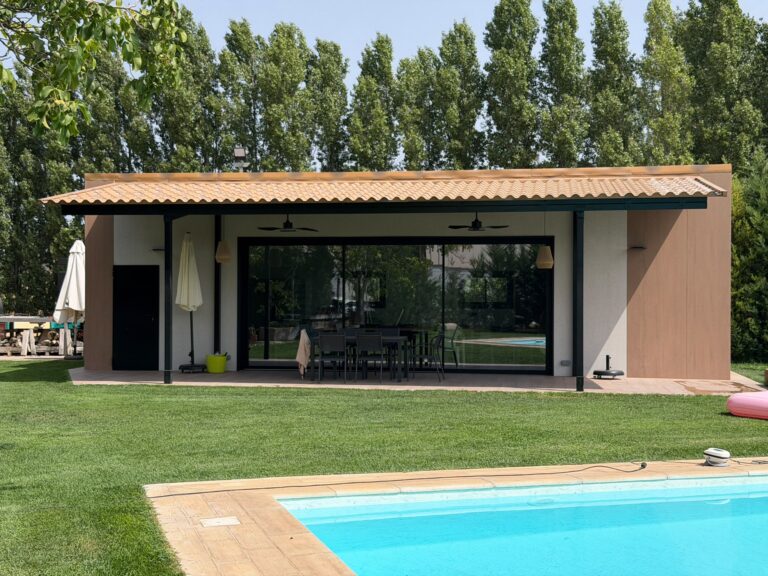
It reproduces the shape and color of aged ceramic tile or slate, with the advantages of the panel. It is much lighter than traditional tile, so in many cases it allows old roofs to be renewed without reinforcing the structure. It should be checked beforehand. It also provides thermal insulation that traditional tile lacks.
It is used in homes, refurbishments, garages, sheds and garden huts. Check the models of tile imitation sandwich panel.
Cold-room panel
It is used in the food and pharmaceutical industry, where maintaining the cold chain is vital. It has a thicker core than the standard panel and a reinforced joining system with special gaskets to achieve airtightness. Its surface is smooth or slightly ribbed to facilitate cleaning. It is the usual material in cold rooms, freezing tunnels and clean rooms.
How to Choose the Type of Sandwich Panel
- Define the use. Cubierta, fachada, tejado con aspecto tradicional o cámara de frío.
- Set your priority. Thermal at a good price: PUR. Thermal and fire: PIR. Noise or demanding fire: rock wool.
- Adjust the thickness. A más espesor, más aislamiento, pero también más coste.
- Check the regulations. Si el edificio tiene requisitos contra incendios, el núcleo y su clasificación deben cumplirlos.
- Consider the weight. Rock wool weighs more. Light cores reduce transport and assembly costs.
- Buy material in good condition. El núcleo adecuado solo garantiza el rendimiento si el panel está en óptimas condiciones.
Frequently asked questions
What type of sandwich panel is best?
There is no one best for everything. It depends on the use and what you prioritize: thermal insulation, fire, noise, aesthetics or budget.
What Is the Difference Between PUR and PIR Panel?
Both insulate very well from cold and heat. PIR is an evolution of PUR with better fire performance and good stability at high temperatures.
Which Panel Insulates Best from Noise?
Rock wool. Its mineral fibers break sound waves. Panels with foam core are less effective in acoustic insulation.
What Types of Sandwich Panel Are There for Roofs?
For roofs, corrugated roof panel is used (3 or 5 corrugations, or flashing) and tile imitation panel. If there are fire or noise requirements, there is also roof panel with rock wool.
Are Sandwich Panel and Sandwich Sheet the Same Thing?
Yes. “Sandwich sheet,” “sandwich-type panel” or “sandwich plate” are common ways of referring to the same product.
Not sure which type of panel you need? Tell us about your project and we’ll advise you on the most suitable core, thickness, and finish. Request your quote or call us at 699 147 762. We custom manufacture, deliver the material to the site, and also offer assembly service.