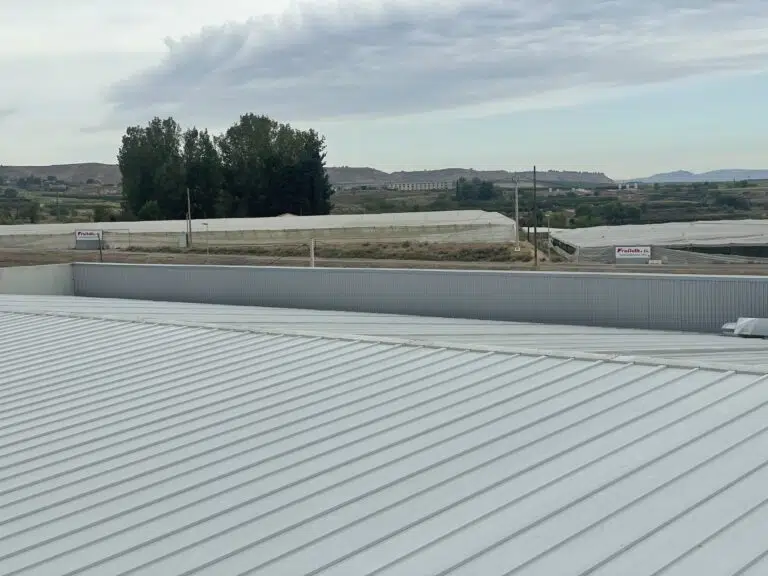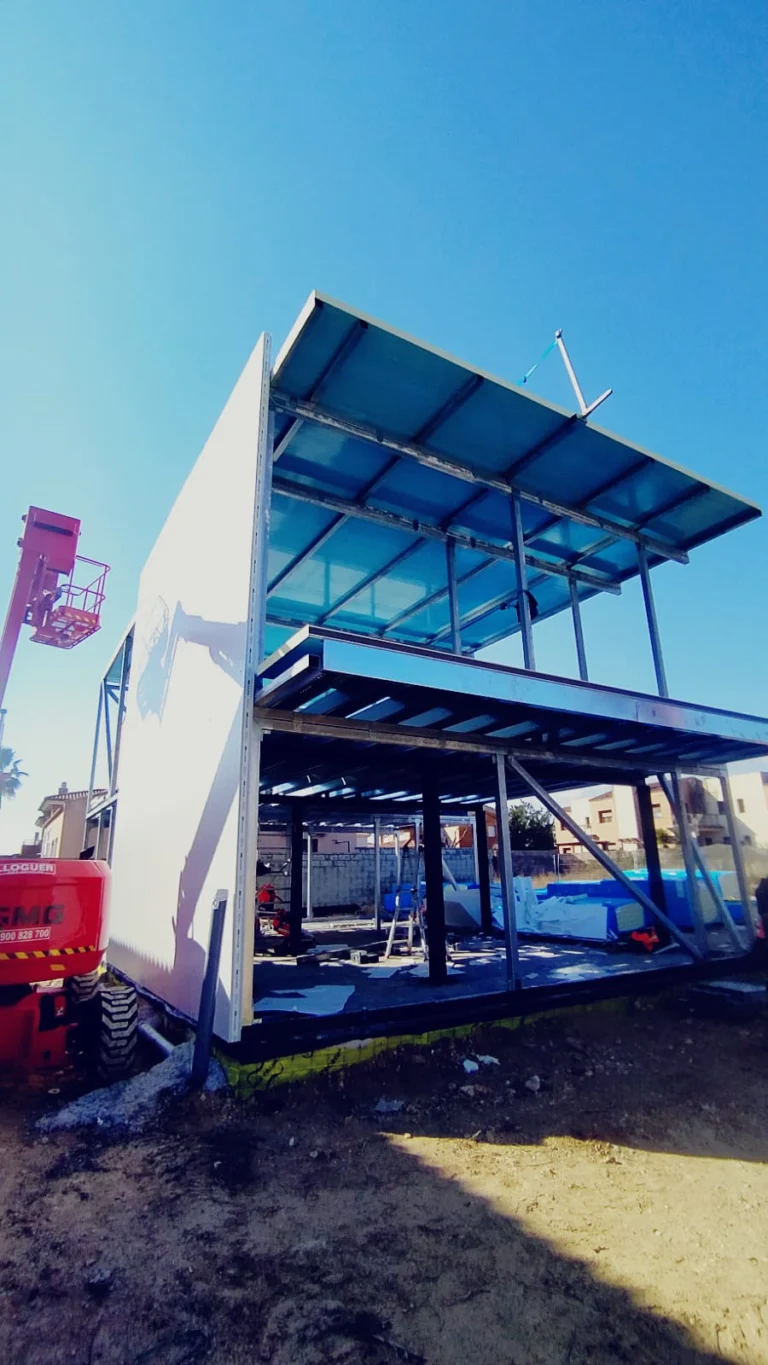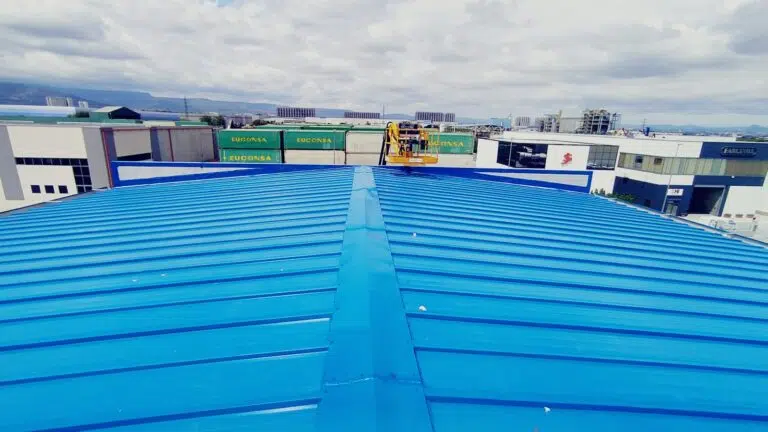
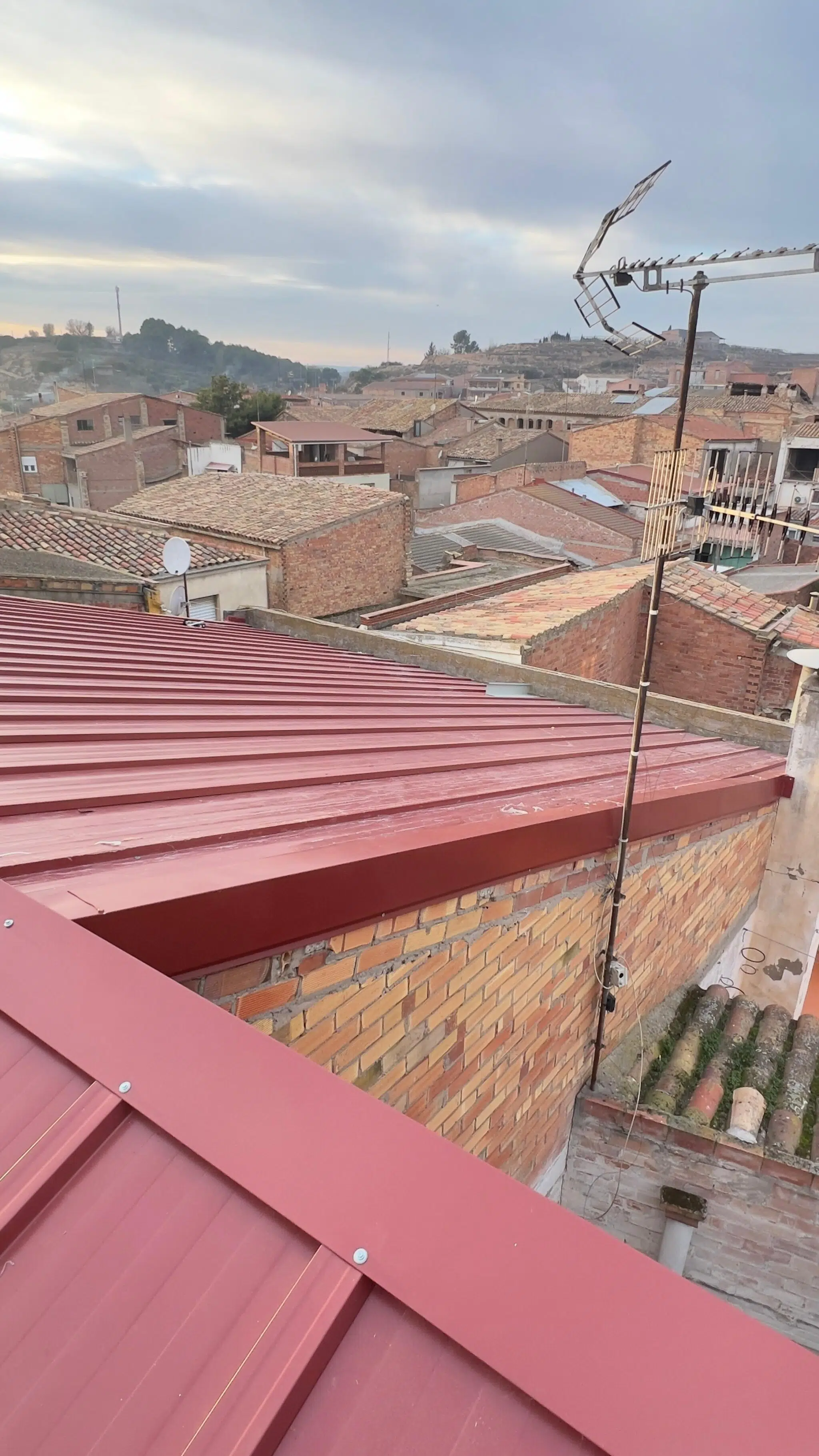
A sandwich panel is a prefabricated construction element made up of three layers: two metal sheets, usually galvanized and prelacquered steel, and an insulating core between them of polyurethane (PUR), polyisocyanurate (PIR) or rock wool. In a single piece it solves the enclosure, the insulation and the finish. That is why it is mainly used in roofs and facades of warehouses, homes, farms, cold rooms and renovations.
You will also see it referred to as sandwich sheeting, sandwich plates, sandwich-type panels, or insulated panels. They are all the same. The name comes from its sandwich-like structure: two “slices” of metal sheet with an insulating “filling” in between. Below, we explain its components, the different types available, and what each one is used for.
Parts of a sandwich panel
The structure of a sandwich panel always follows the same scheme. Each layer fulfils a function:
- Outer face. Galvanized and prelacquered steel sheet, although it can also be aluminium. It protects against rain, wind, corrosion and UV rays. Its profile changes depending on the use: with corrugations on the roof, smooth on the facade or tile-shaped.
- Insulating core. It is the “filling” and defines a large part of the panel’s performance: thermal insulation, acoustic insulation and fire behaviour. In addition, it joins the two sheets and gives rigidity to the whole.
- Inner face. Another metal sheet, usually lacquered steel. It is the finish you see from inside.
- Joining system. The panels are joined together by overlap or tongue and groove, depending on the model. They are fixed to the structure with specific screws, visible or concealed depending on the model.
The result is a light and rigid piece that combines mechanical strength with thermal and acoustic insulation.
Types of insulating core
The core is what most differentiates one panel from another. These are the most common:
| Core | What it provides | Typical use |
|---|---|---|
| Polyurethane (PUR) | Very good thermal insulation with little thickness and low weight | Roofs, facades, homes and cold rooms |
| Polyisocyanurate (PIR) | Thermal performance similar to PUR and better fire behaviour | Industrial warehouses, logistics centres and buildings with safety requirements |
| Rock wool | Fire resistance and good acoustic insulation | Factories, hospitals and buildings where fire or noise are priorities |
There are also panels with expanded polystyrene (EPS) core. If you are unsure between them, we explain it in differences between PIR and EPS sandwich panel.
Types of sandwich panels according to their use
In addition to the core, each panel is designed for a specific function:
- Roof panel. For roofs. It has corrugations on the outer face that give rigidity and facilitate water drainage. There are versions with 3 corrugations, 5 corrugations and flashing. You have it in our sandwich panel for roofing section.
- Facade panel. For vertical enclosures of warehouses, premises and homes. It provides insulation and exterior finish in a single product, with smooth faces or wood imitation. Check the facade sandwich panel models.
- Tile imitation panel. Reproduces the appearance of a tiled roof. Widely used in homes and rural houses.
- Wood finish panel. Para proyectos donde la estética cálida es prioritaria.
- Cold room panel. Para cámaras de conservación y de congelación, donde hay que mantener temperaturas constantes.
- Rock wool panel. Para edificios con exigencias de protección contra incendios o de aislamiento acústico.
- Agropanel. Pensado para granjas y naves ganaderas.
Roof and facade panels are not interchangeable: the profile, the joining system and the way they are fixed change. We see it in differences between roof and wall panel. And if you want to see the full range, you have all the types of sandwich panel by use.
Finishes and colours
The outer face accepts different finishes: corrugated, smooth, tile imitation, wood imitation or slate imitation. Prelacquered sheets are manufactured in various colours. This way the panel can be integrated into an industrial warehouse, a home facade or a rural setting. The inner face is usually galvanized or lacquered sheet.
The full color chart is available, model by model, in sandwich panel colors.
What is sandwich panel used for?
It was born in the industrial field to insulate large roofs and reduce construction time. Today it is used in almost any type of building. The most common applications are:
- Industrial warehouses, logistics and storage. Es el uso más extendido, tanto en cubierta como en fachada.
- Facades and enclosures. En edificios industriales, comerciales y residenciales.
- Cold rooms. En el sector alimentario y farmacéutico.
- Livestock farms and agricultural facilities. Establos, naves ganaderas y almacenes agrícolas.
- Commercial buildings. Tiendas, supermercados, concesionarios y talleres.
- Sports facilities. Pabellones, gimnasios, pistas cubiertas y piscinas climatizadas, porque cubre grandes luces con poco peso.
- Public buildings. Escuelas, hospitales y edificios administrativos.
- Homes and modular construction. Viviendas prefabricadas, casetas de obra y oficinas temporales.
- Small works. Porches, pérgolas, garajes, trasteros, techos de terraza y ampliaciones.
- Renovation. Replacement of old roofs. Being light, it is often not necessary to reinforce the existing structure.
It is widely used because it insulates well, weighs little, is assembled quickly and dry, and requires little maintenance.
What structure does a sandwich panel need
The sandwich panel is an enclosure, not a structural element. It is self-supporting between supports, but it needs a structure to hold it: metal or wooden purlins on the roof, and a substructure on the facade. It can be mounted on metal or concrete structures.
Before ordering the material it is advisable to define several points with the manufacturer:
- The shape, slope and surface area of the roof.
- The snow and wind loads in the area, and the load capacity of the chosen panel.
- The thickness, the span between supports and the number of bays of each panel.
- The loads of installations: lighting, air conditioning, ventilation and water drainage.
- The elements that will be on the roof: skylights, hatches or snow barriers.
- The type of fixing, the way to join and seal the panels and lightning protection.
If you do not yet have the structure, check what structure you need before installing sandwich panel.
Advantages and disadvantages of sandwich panels
Advantages:
- All in one piece: the outer sheet, insulation and interior finish arrive joined together, so the roof or façade is closed and insulated in a single operation.
- Fast, dry installation: it’s screwed directly to the purlins, with no mortar or drying times.
- Lightweight: it weighs far less than a ceramic tile roof, allowing for simpler structures.
- Made to measure: manufactured to the length you need, with fewer overlaps and fewer points where water could get in.
- Low maintenance if properly installed: cleaning, and checking screws and flashings.
Disadvantages:
- Rain is more noticeable than with a heavy roof, except with rock wool sandwich panels.
- Ribbed models have an industrial look; for homes, there are tile-effect sandwich panels and wood-effect options.
- If the sheet gets scratched or cut with an angle grinder, it can rust.
- PUR or PIR cores are not incombustible: when an A1 or A2 fire reaction rating is required, rock wool must be used.
We explain this in more detail in advantages and disadvantages of sandwich panels.
Frequently asked questions
Why is it called sandwich panel?
Because it has three layers, like a sandwich: two outer sheets and an insulating core in the centre.
Is sandwich panel the same as sandwich sheet?
Yes. Sandwich sheet, sandwich plate and sandwich-type panel are different names for the same product. It should not be confused with simple corrugated sheet, which does not have insulation.
Can sandwich panel be used in a home?
Yes. It is used in roofs and facades of homes, in modular homes and in extensions, with finishes such as tile or wood imitation.
Which core is better?
It depends on the use. Polyurethane offers the best thermal insulation with low weight. Rock wool is the option when fire or noise matter. PIR is a middle ground with better fire behaviour than PUR.
Does the sandwich panel replace the structure?
No. It is an enclosure that is fixed on a load-bearing structure, metal, wood or concrete.
If you have a project in mind, we advise you on the right panel, we manufacture it to measure and we deliver it to site. Request a quote and, if you need it, we also take care of the installation of the panels.