To waterproof a sandwich panel roof you don’t need to cover the entire roof: almost all leaks come through overlaps, screws, flashings and gutters. Inspecting and sealing those points with butyl, polyurethane sealant or new washers solves most leaks. Only if the roof is severely deteriorated does it make sense to apply a continuous liquid membrane or replace damaged panels.
Where water gets in
Sealing materials
- Butyl tape: for overlaps and joints. It adapts to the profile and remains elastic.
- Polyurethane sealant: for junctions, flashings and small cracks.
- Neutral silicone: only for spot repairs; lasts less than polyurethane.
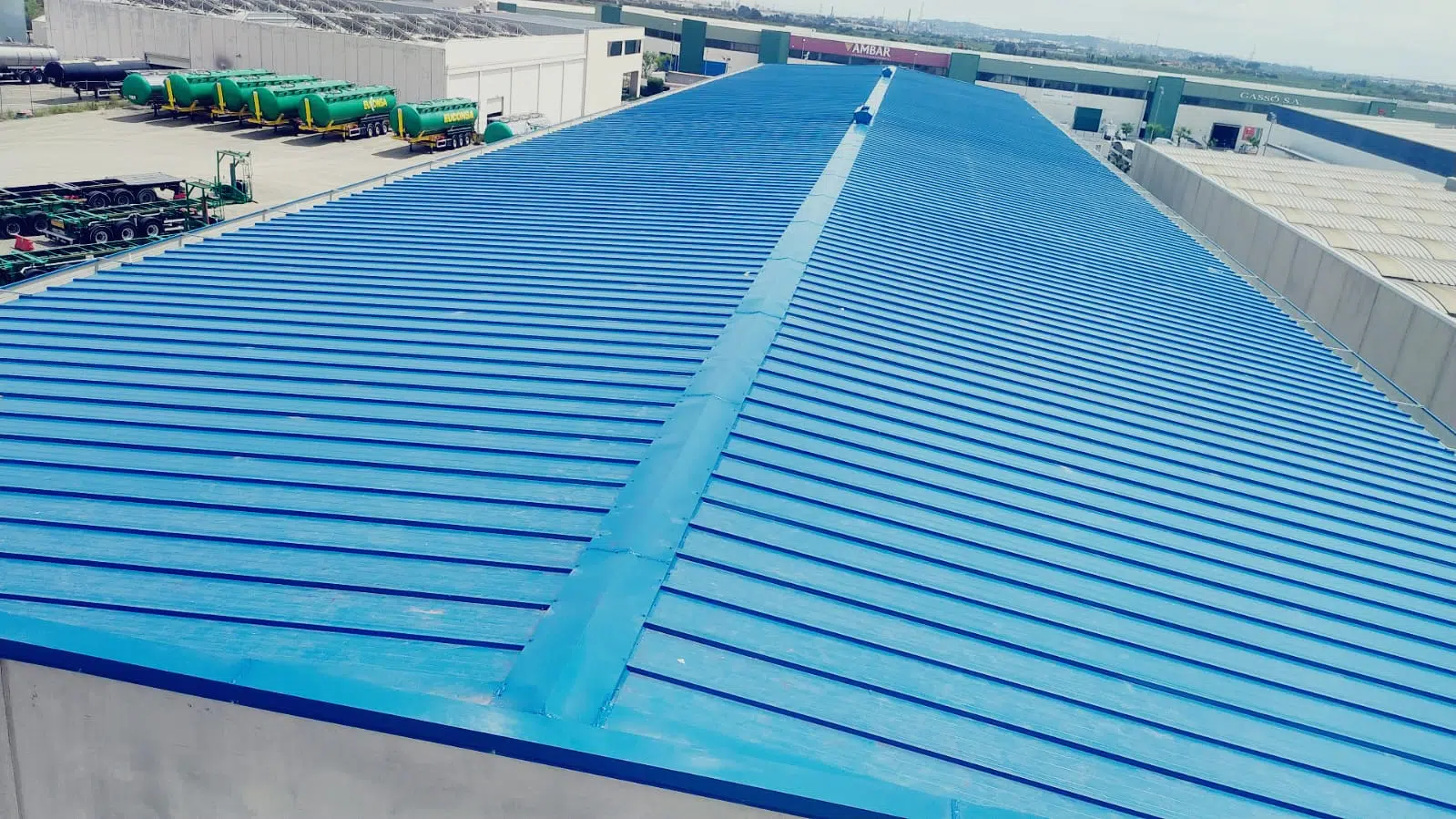
- Liquid polyurethane membrane: for severely deteriorated roofs. Creates a continuous, elastic layer over the entire sheet.
You’ll find waterproofing products in roof waterproofing and sealing.
How to waterproof step by step
- Locate the water entry point from inside, after rain. Water runs along the sheet, so the leak may be far from the entry point.
- Clean the area of mud, rust and old silicone residue. Sealants won’t adhere to dirt.
- Replace damaged screws with new screws with EPDM washers.
- Seal overlaps and flashings with butyl or polyurethane sealant.
- Check the slope: if it’s below the panel’s minimum, water pools and will leak again. See the minimum slope by panel type.
When to replace panels
If the panel is perforated, heavily rusted or the insulation has become soaked, sealing isn’t enough: those panels must be replaced. We manufacture them to the exact dimensions of your existing ones. To avoid repeating the problem, review the common mistakes when installing sandwich panel.
Frequently asked questions
Why do leaks occur in a sandwich panel roof?
Almost always due to worn screw washers, unsealed overlaps, poorly positioned flashings or blocked gutters.
Can the roof be painted with waterproofing?
Yes. There are liquid polyurethane membranes for metal roofs that form a continuous layer. Critical points must be cleaned and sealed first.
How does slope affect leaks?
With less than the panel’s minimum slope, water remains in the profiles and enters through overlaps and screws.
Does the panel need to be replaced if it has leaks?
Not always. If detected in time, sealing the joints and replacing the screws is enough.
What maintenance does a waterproofed roof require?
Clean gutters and inspect screws and flashings twice a year, before and after the rainy season. More details in the sandwich panel roof maintenance.
Do you have leaks in a panel roof? Send us photos and measurements and we’ll tell you whether sealing is enough or panels need replacing. Request a quote or call us on 699 147 762.