Sandwich panels insulate thanks to their core: polyurethane foam (PUR or PIR), rock wool, or polystyrene, placed between two metal sheets. How much they insulate depends mainly on the type of core and its thickness, and also on how it is installed. It acts as both a thermal and acoustic barrier.
The short answer: for thermal insulation with low thickness, polyurethane (PUR or PIR) is one of the most efficient. If you are also concerned about noise, rock wool panels are the best option, because their fibers absorb sound. In both cases, installation is crucial: a good material poorly installed can lose much of its performance.
How many degrees does a sandwich panel insulate?
Insulation is not measured in degrees. What the panel does is reduce heat transfer between the exterior and interior. Technically, it is expressed with thermal transmittance (U-value): the lower the value, the better the enclosure insulates.
You will see estimates that a panel with a polyurethane core allows a difference of up to about 20 °C between inside and outside. Take these only as a general guide. The actual indoor temperature depends on:
- The type of core and its thickness.
- Direct sun exposure.
- Humidity and ventilation of the space.
- Whether or not there is heating or air conditioning.
- The quality of the installation: joints, overlaps, and finishes.
To compare panels, look at the technical data sheet and not a degree figure.
What determines the thermal insulation of the panel
Core type
- PUR / PIR: excellent thermal insulation with low thickness. PIR also performs better against fire.
- Rock wool: good thermal insulation, combined with high acoustic performance and fire resistance.
- EPS: economical solution for standard applications.
Thickness
The greater the thickness, the greater the insulation capacity. Thicker panels are suitable for extreme climates. Choose the thickness according to the thermal and acoustic requirements of your building, without overdoing it: more thickness also means more cost.
Site Conditions
Sun exposure, humidity, and ventilation affect insulation efficiency. In coastal areas, choose a corrosion-resistant coating for panel longevity. If you are concerned about indoor humidity, check out these solutions for condensation on roofs.
Which core to choose based on your needs
| What you need | Core to consider | Why |
|---|---|---|
| Maximum thermal insulation with low thickness | PUR or PIR | They insulate very well with reduced thicknesses and are lightweight |
| Thermal insulation and better fire performance | PIR | Evolution of PUR with better fire reaction |
| Reduce outdoor noise or indoor reverberation | Rock wool | Its fibers break sound waves and it is non-combustible |
| Economical solution for standard uses | EPS | Acceptable insulation at lower cost |
Acoustic insulation: when to choose rock wool
If you are looking for an acoustic sandwich panel, rock wool is the benchmark. Unlike polyurethane, its mineral fibers break sound waves and dissipate their energy. This prevents noise from passing through the enclosure. Panels with a foam core are less effective in this regard.
The panel thickness and core type directly influence acoustic attenuation: greater thickness means greater noise reduction. Versions with micro-perforated inner sheets also exist. The small holes allow sound to pass into the wool, which absorbs it, thus reducing reverberation inside the enclosure.
If noise, from outside or indoor reverberation, bothers you in a warehouse or a house with a panel roof, rock wool is the option to consider. It is especially useful in:
- Industrial buildings and machine or compressor rooms.
- Homes near roads or in urban areas.
- Agricultural and livestock buildings.
- Leisure venues and recording studios.
For facades with acoustic requirements, check out the acoustic rock wool panel for facades.
Insulated roofs: tile panel and roof panel
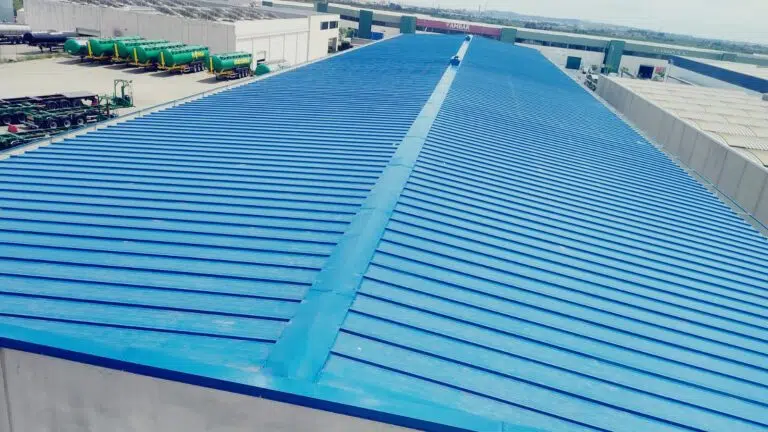
If you are looking for insulated roofing sheets or panels, the sandwich panel is the direct solution: the outer sheet, the insulation, and the inner face come in a single piece.
- Tile imitation panel: pre-lacquered steel outer sheet with a tile shape and an insulating core, usually polyurethane. It maintains a more stable temperature in the home and provides insulation that traditional tiles lack. It fits in homes, porches, sheds, and roof rehabilitation. You can see it in tile imitation sandwich panel.
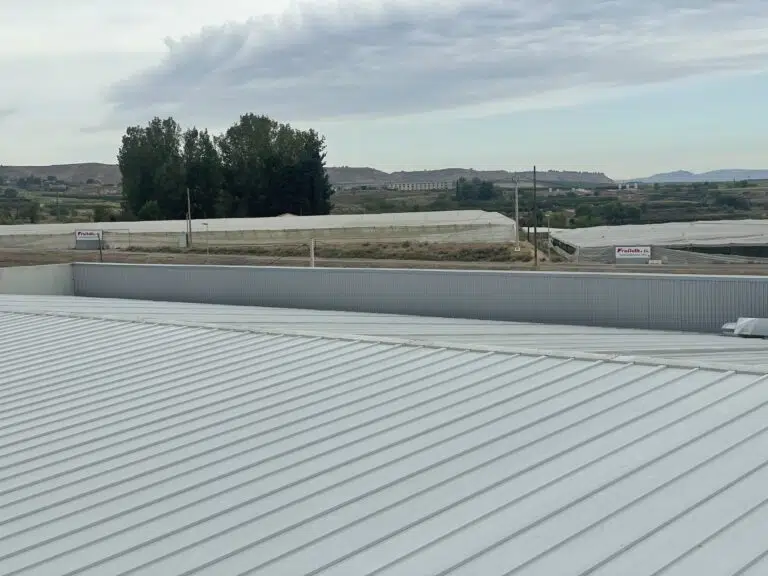
- Roof panel: the usual option for warehouses, garages, and porches. Compared to simple sheeting, it reduces heat loss in winter and overheating in summer.
Traditional enclosures, such as block, concrete, or simple sheeting, usually present more heat loss, thermal bridges, and poorer acoustic insulation. We explain this in the differences between insulated panel and simple sheeting.
In harsh climates, the panel withstands wind, hail, and snow well, provided it is well chosen and fixed to the structure.
Energy savings: what you can expect
Good insulation reduces the need for heating in winter and air conditioning in summer. This translates into:
- Lower energy bills.
- More comfort: the indoor temperature remains more constant.
- Lower carbon footprint of the building, by consuming less energy.
The exact savings depend on your area’s climate, panel thickness, and insulating material. The initial investment is greater than that of simple sheeting, but energy costs decrease in the medium and long term.
How to get the most out of insulation
- Choose the core according to the building’s use. Térmico, acústico o con exigencias de fuego.
- Select the correct thickness based on thermal and acoustic requirements.
- Ensure proper installation. Avoid errors in fixings, overlaps, and joints. Review common errors when installing sandwich panels.
- Seal well. Así eliminas filtraciones de aire y reduces los puentes térmicos.
- Use original finishes and accessories. Garantizan la estanqueidad y protegen el núcleo de la humedad.
- Support it with a good structure, designed for the chosen panel type.
Frequently asked questions
Which insulates more, polyurethane or rock wool?
Thermally they are similar, although polyurethane has a slightly better coefficient against cold and heat. Acoustically, rock wool is far superior.
Does the sandwich panel eliminate thermal bridges?
It reduces them if installed correctly. Critical points are junctions, joints, and finishes. Proper sealing is essential.
What thickness do I need?
It depends on the use and climate. As a guide, 30 or 40 mm is usually sufficient for a garage, and 40 to 50 mm is a good balance for a standard storage warehouse. For extreme climates or cold rooms, greater thickness is needed.
Does rock wool lose insulation if it gets wet?
Rock wool is water-repellent, but it must be protected by the steel sheet. If the core gets wet, it temporarily loses properties until it dries.
Is the sandwich panel suitable for roof rehabilitation?
Yes. It improves insulation without overloading the structure, although it is advisable to inspect it beforehand.
Do you want to improve the insulation of your roof or facade? We help you choose the right core and thickness. Request your quote or call us at 699 147 762. If you need it, we also handle the panel installation.