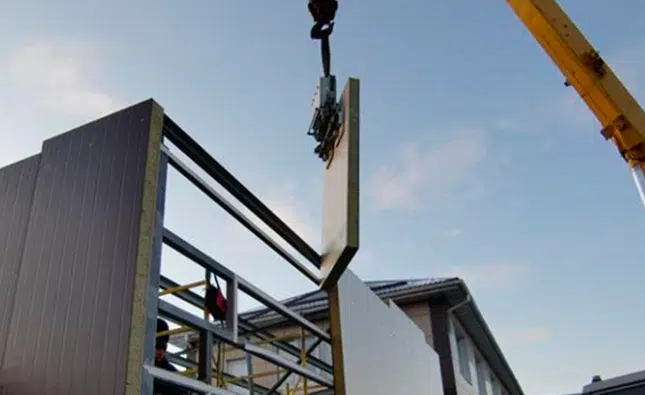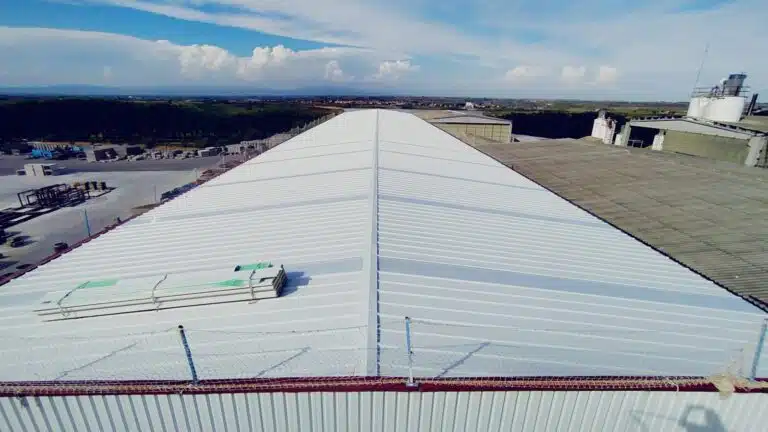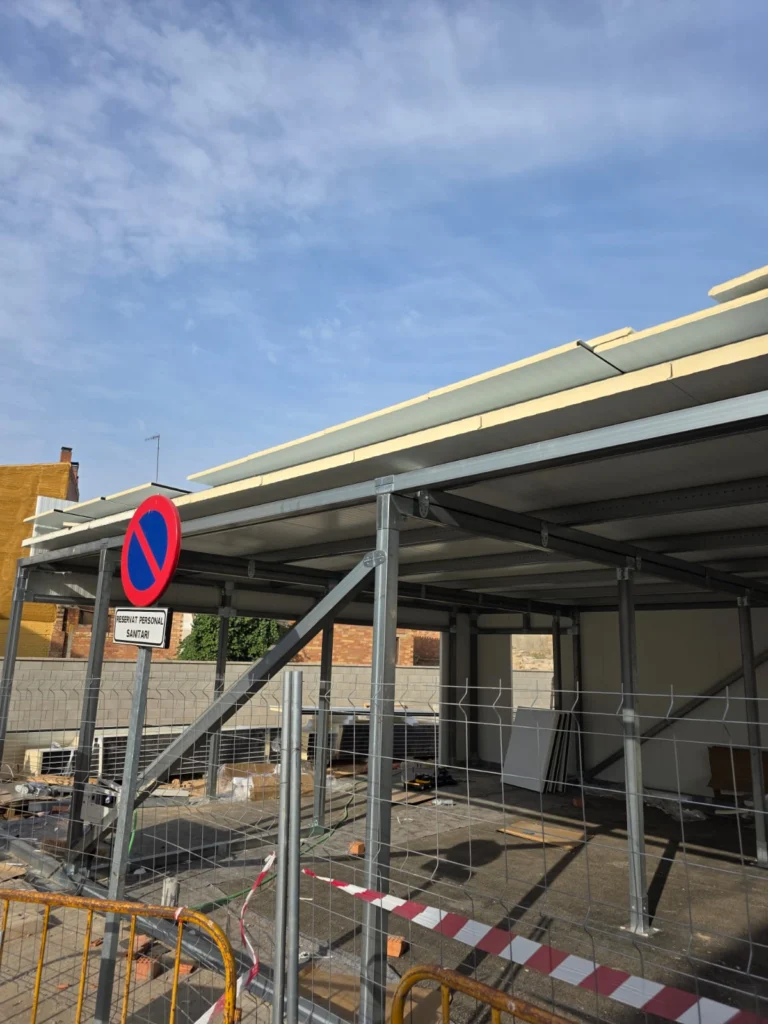
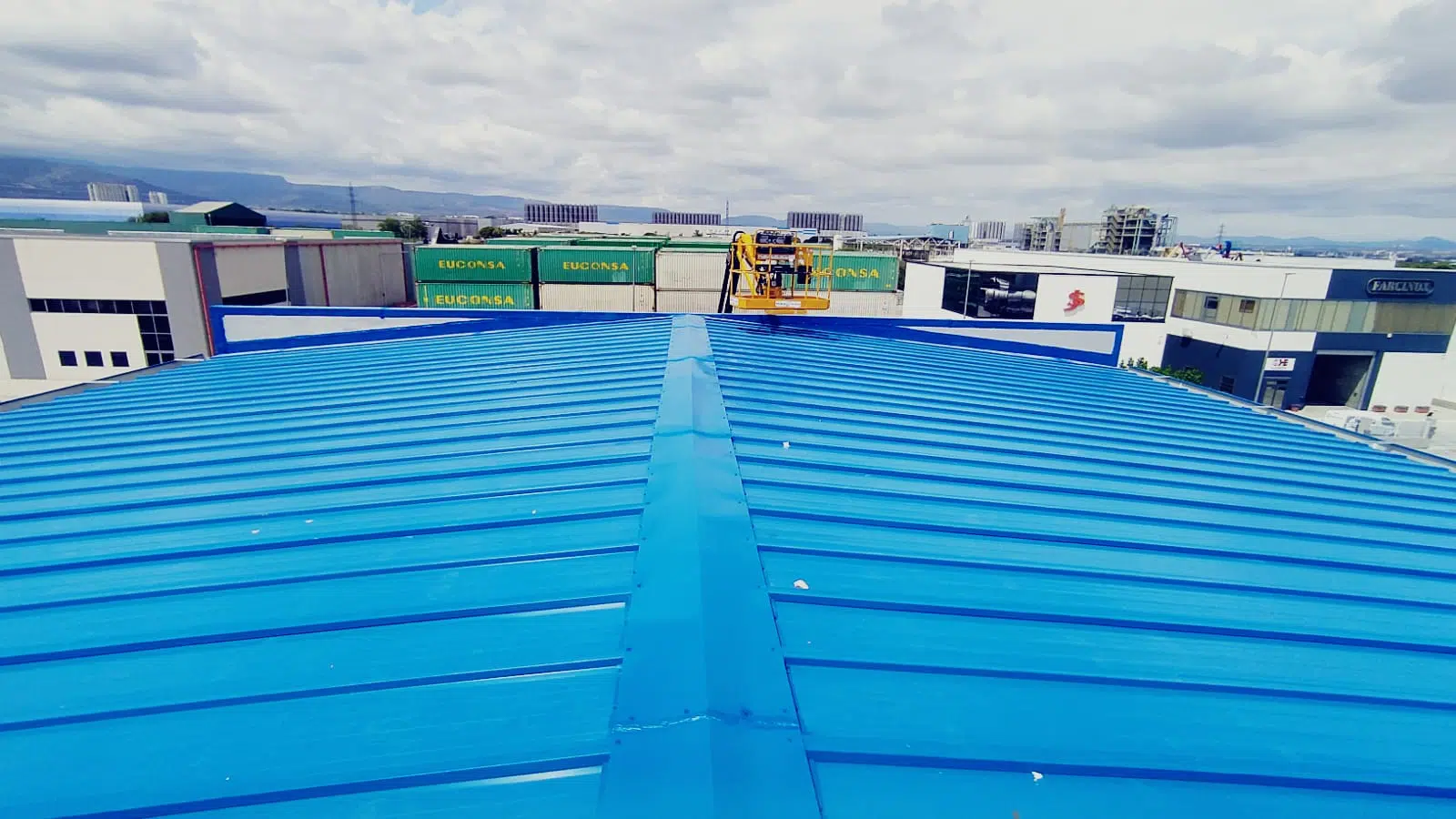
Almost all problems with a sandwich panel roof or facade come from installation, not the material: insufficient slope, an uneven structure, wrongly chosen or overtightened screws, overlaps the wrong way round, cuts made with an angle grinder, and unsealed Flashing. These 9 mistakes explain most leaks, condensation, and rust stains. For each one, here’s how to avoid it.
1. Installing with less than the minimum slope
Each model has its minimum slope: 5% for panels with flashing and corrugated panels, and 10% for tile-effect panels. With less pitch, water pools in the ribs and ends up getting in through overlaps and screws. It’s explained in minimum slope and key tips for installing sandwich panels on roofs.
2. Uneven structure or purlins spaced too far apart
If the purlins aren’t in the same plane, the panel sits twisted and the overlaps open up. If they’re too far apart, the panel deflects under snow or wind. Check for level before installing and keep to the spacing shown in the load tables on each datasheet. More details in the structure guide for sandwich panels.
3. Wrong screw or overtightened/undertightened
- Each substrate needs its own screw: metal purlin, timber, or concrete.
- On roofs, screw into the crest of the rib, never in the valley.
- The EPDM washer should be compressed, not crushed. If you overtighten it, it cracks; if you undertighten it, it won’t seal.
- Use a torque-controlled screwdriver and don’t reuse screws.
4. Overlaps the wrong way round
Install from bottom to top and against the prevailing wind. If you do it the other way round, driving rain gets in through the overlap. When a roof slope needs two panels in length, the upper panel overlaps the lower one. With low slopes, that overlap is sealed with butyl tape.
5. Cutting with an angle grinder
The grinder’s heat burns the sheet coating and the insulation. The cut edge rusts within a few months, and the sparks leave rust spots around it. Cut with a jigsaw or a fine-tooth circular saw and, if you can, order the panels to the exact size.
6. Leaving swarf on top
Swarf from screws and cuts rusts with the first rain and stains the sheet. Sweep with a soft brush after finishing each section.
7. Forgetting the protective film
Remove the film once you’ve finished installing each panel. If it sits in the sun for weeks, the adhesive bonds to the sheet and is very hard to remove.
8. Unsealed Flashing or a different colour
Junctions with walls, chimneys, skylights, and the ridge are where water gets in most often. Use sheet-metal Flashing in the same colour as the panel, seal the junctions, and fit a chimney cap on chimneys.
9. Using single sheet where a panel is needed
A single sheet without insulation will drip from condensation in livestock buildings, kitchens, or damp warehouses. In those cases you need roof sandwich panels or agropanel.
Checklist before installing
Frequently asked questions
What are the drawbacks of sandwich panels?
When installed properly, there are few: they insulate less against rain noise than a heavy roof (except rock wool), and aesthetically they’re not everyone’s taste. Most issues blamed on them—like leaks, rust, or condensation—are installation mistakes. We explain it in advantages and disadvantages of sandwich panels.
Why does a sandwich panel roof drip?
Almost always for one of these reasons: insufficient slope, screws in the valley or not tightened correctly, overlaps the wrong way round, or unsealed Flashing.
Can a poorly installed roof be fixed?
Yes, in many cases: screws are replaced, overlaps are sealed, and the missing Flashing is installed. If the slope is insufficient, the solution is more expensive.
If you’re installing it yourself, send us the measurements and we’ll prepare made-to-measure panels, Flashing, and fixings. If you’d rather not take the risk, we offer an installation service. Request a quote or call us on 699 147 762.